The Tourbillon
Patented by Abraham-Louis Breguet in 1801, the tourbillon was born from a quest for precision. In 2026, this invention continues to embody one of the most exacting expressions of Breguet watchmaking.
1801, the invention of the tourbillon
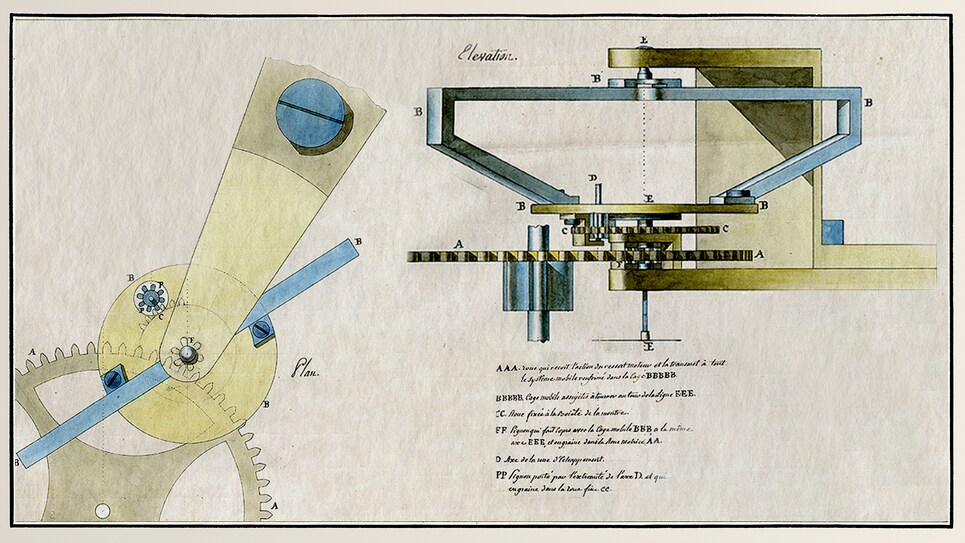
On 26 June 1801, Abraham-Louis Breguet obtained the patent for his tourbillon regulator. Designed to improve the regularity of pocket watches, this mechanism addressed a very concrete issue: the effects of gravity on the regulating organ when a watch remains in a vertical position.
Setting precision in motion
The principle of the tourbillon consists in placing the escapement and the balance wheel in a mobile cage. By rotating regularly on itself, this cage distributes the rate variations linked to vertical positions instead of allowing them to accumulate in a single position.
Gravity disturbs the movement of the balance wheel. A mechanism must compensate for it.
A mobile cage containing the escapement and the balance wheel completes one revolution on itself every minute.
Rate variations cancel each other out.
A rare invention from the very beginning
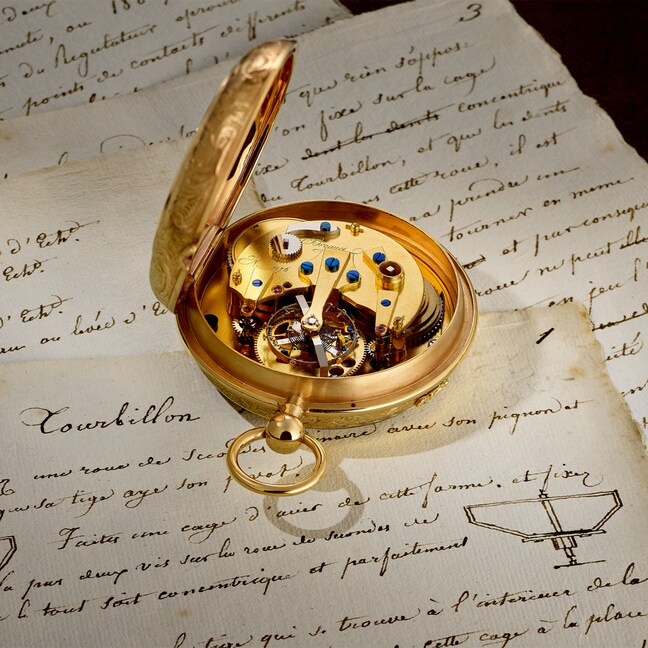
Of extreme complexity, the tourbillon remained rare in the first decades following its invention. Each execution requires advanced mastery of movement architecture, regulation and energy. This rarity helps make the tourbillon one of Breguet’s most remarkable signatures.
From invention to signature
At Breguet, the tourbillon is not merely a complication. It expresses a way of conceiving watchmaking: starting from a concrete problem, imagining a mechanical solution, then transforming that solution into a visible architecture.
The tourbillon today
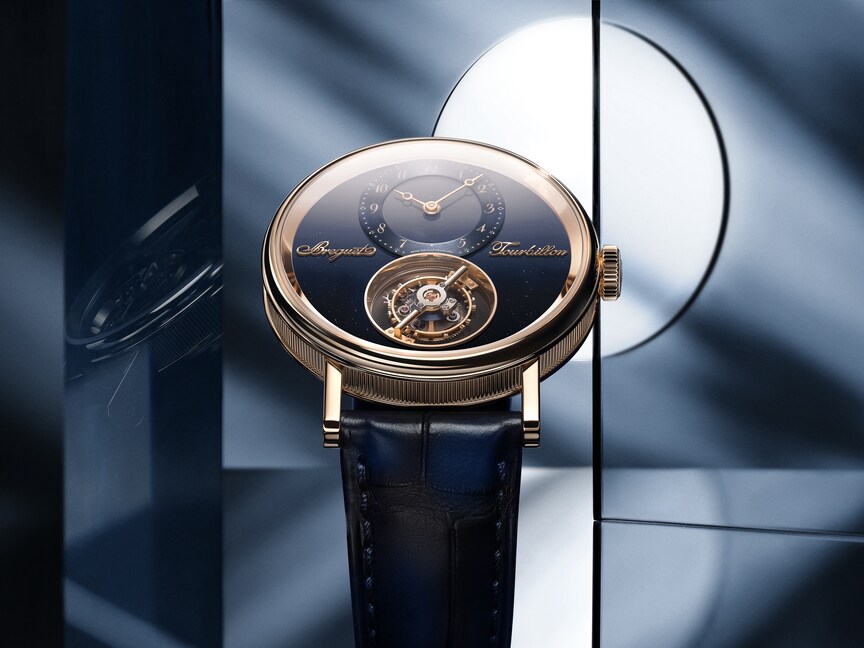
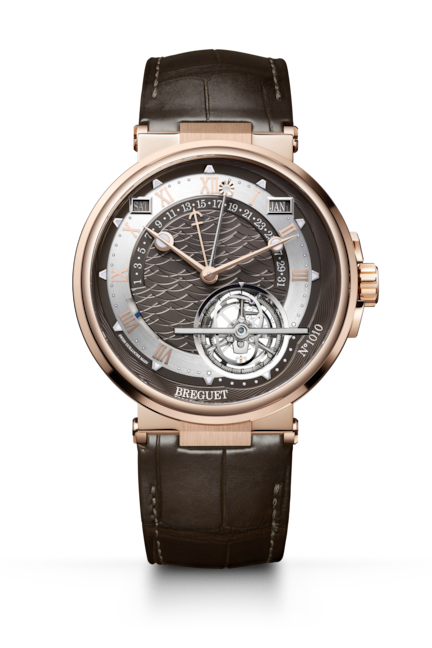
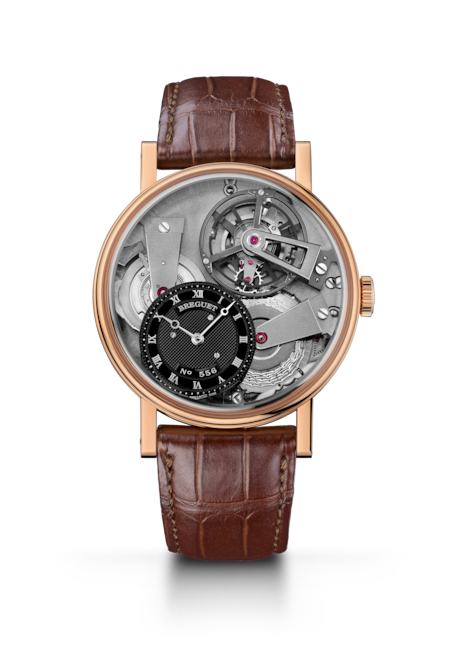
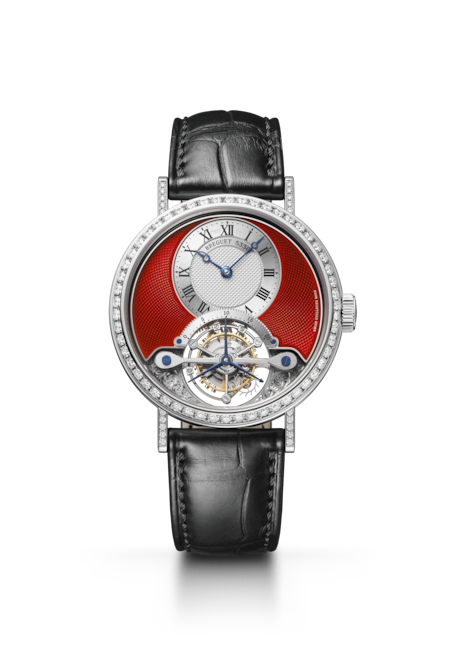
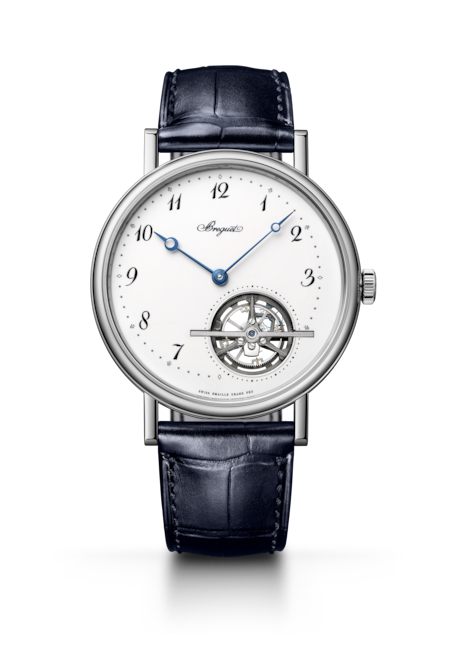
In contemporary collections, the tourbillon takes several forms. It may appear in a classic and refined composition, in an open architecture inspired by historical movements, or in more complex high watchmaking constructions.

Plan your special occasion
Come and discover our timepieces in one of our boutiques.
Plan your visit