
The tourbillons of the inventor
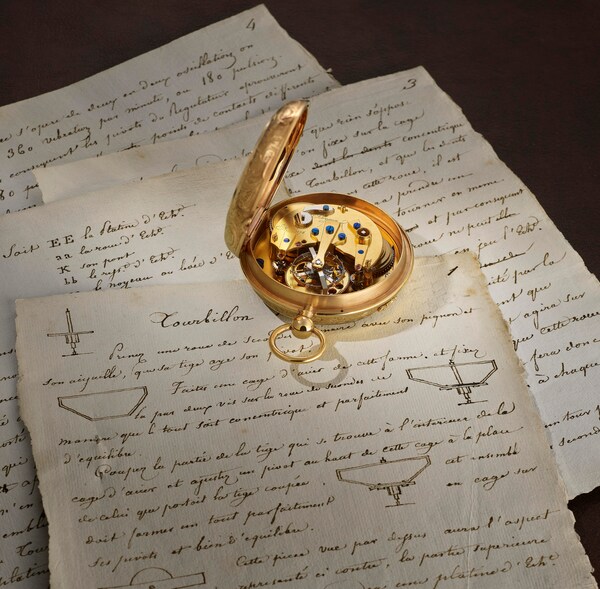
by 艾曼紐.寶璣“Citizen Minister (...), By means of this invention I have successfully compensated for the anomalies arising from the different positions of the centres of gravity and the movements of the regulator (...)”.
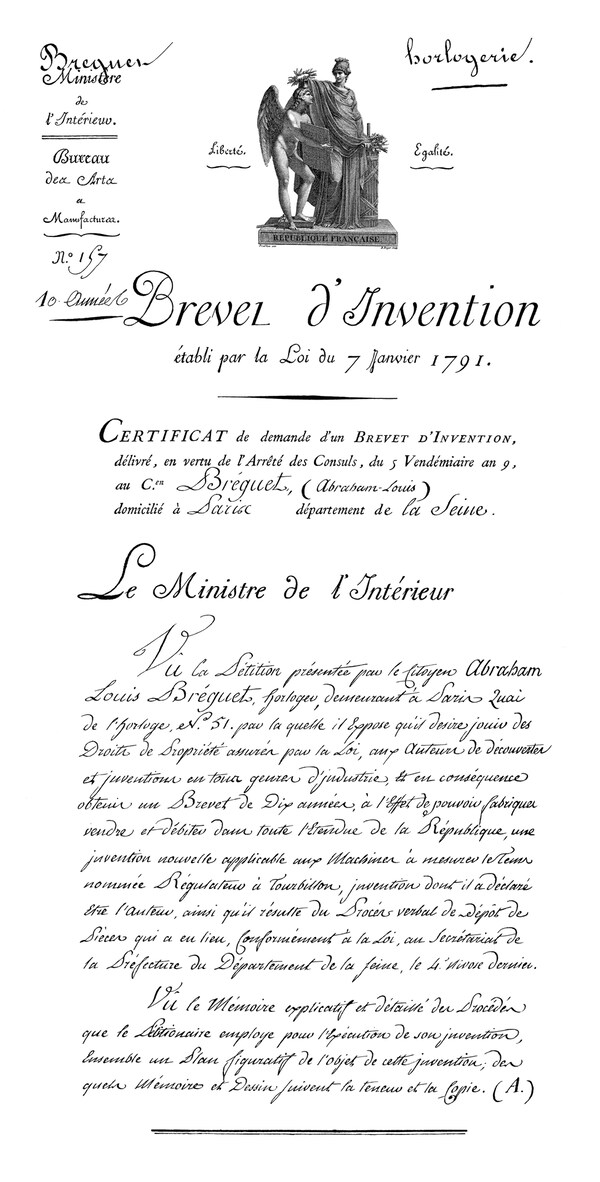
So wrote Abraham-Louis Breguet in the letter addressed to the Minister of the Interior accompanying the sealed file submitted to the secretariat of the Prefecture of the Seine department in Paris, on December 26, 1800.
Six months later, on June 26, 1801 – or Messidor 7, Year IX as it was then known in France, which had just experienced a memorable revolution – the file had been examined and the inventor was granted a patent for the Tourbillon, a complex system that would become one of the greatest horological complications of all time.
Up:
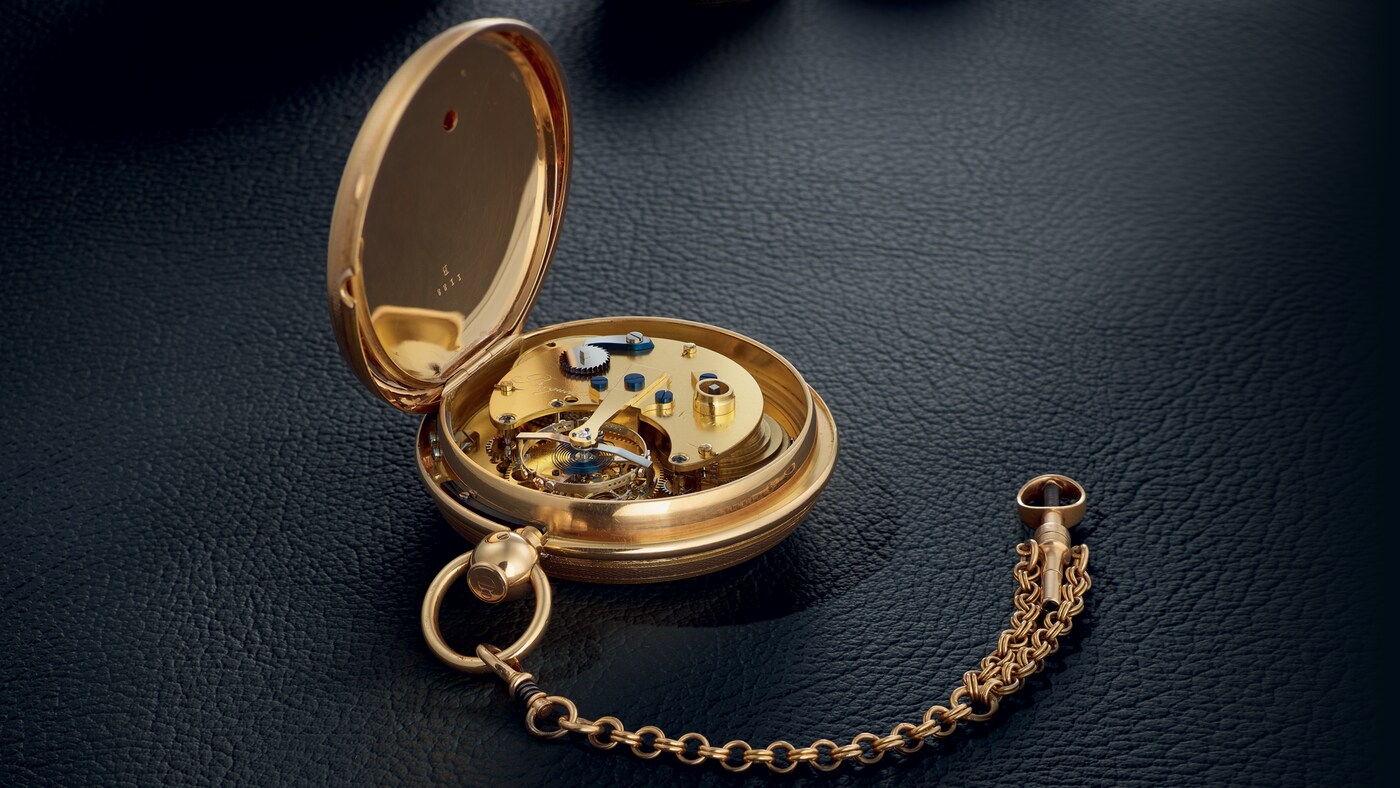
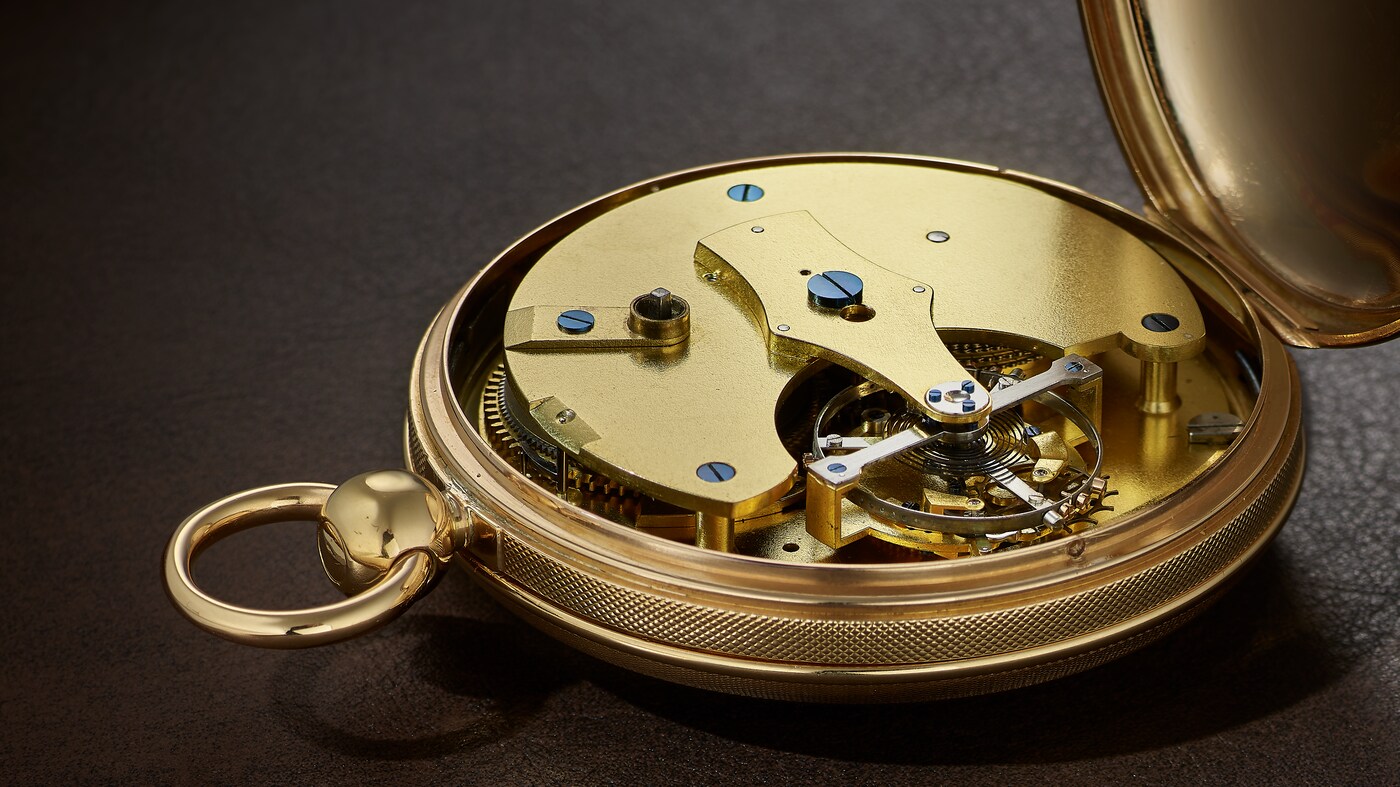
Montre Breguet n°2567
Right:
Montre Breguet n°2567
Up:
Montre Breguet n°2567

This invention was a brilliant invention at the heart of a genuine human adventure that still contributes extensively to the reputation of its creator Abraham-Louis Breguet and his House…
An expression of their era, technical inventions rarely maintain their relevance from one century to the next. One innovation replaces another, yet a few rare ones resist and manage to surprise observers.
Developed over two centuries ago by Abraham-Louis Breguet (1747–1823), the Tourbillon has never been as vital to fine horology as it is today.
Regarded as one of the greatest complications of all time, it continues to flourish at the House of Breguet, its custodian. It has however also been adopted by a number of other watchmaking brands, because when Breguet patented it in 1801, it did so for only 10 years!
Throughout the 19th century, it inspired other engineers, including Bahne Bonniksen who invented the karussel based on the observations made by Breguet.
The fascination with Breguet’s invention stems from the origins of this feat: the Tourbillon is more than just a mechanical work of art – it is the result of a precise study of physics, a human adventure and an industrial saga in its own right.
A man of experience
The Tourbillon sprang from the brilliant mind of a man who had already carved out a successful career for himself.
Born in 1747 in Neuchatel, Switzerland, Abraham-Louis Breguet began his watchmaking apprenticeship in his native land at the age of 15 and subsequently continued his training in Versailles and Paris.
In the French capital, a world metropolis even then, young Breguet obtained an academic education, most notably at Mazarin College.
It provided a strong foundation in sciences, particularly mathematics and physics, which to all intents and purposes made Breguet an engineer before the term existed.
By the time he presented his idea of the Tourbillon in 1801 and applied to the authorities for a patent, he already had a long career behind him, having set up his own business on Île de la Cité 25 years earlier in 1775.
His self-winding Perpétuelle watches had enchanted first King Louis XVI and Queen Marie-Antoinette and eventually the entire court at Versailles.
Countless technical innovations and a talent for sleek, minimalist design had made Breguet an innovator of international repute.
His name was becoming well known in all the major capitals, and many were seeking to imitate him.
Up:
Letter from the Minister of the Interior granting Breguet the patent for the Tourbillon Regulator
A winning comeback
Fearing for his life in 1793, Breguet was forced to flee the excesses of the French Revolution in order to seek refuge in the country of his birth.
He lived in Switzerland for two years, first in Geneva, then in Neuchatel, and finally in Le Locle.
He spent part of his time managing from a distance his Parisian workshop that he had entrusted to one of his most loyal employees, Thomas Boulanger.
While there was no shortage of difficulties, he also continued training his only son, Antoine-Louis, born in 1776.
One can however see this period as a fruitful sabbatical, a period of intense intellectual work and exchanges with the Swiss watchmakers of the Geneva and Neuchatel Jura regions.
Upon his return, his various observations were to give a spectacular new lease on life to his career.
The least one could say about the great Breguet – who was nearing the age of 60 by then yet showing little signs of wear – is that he still held a number of trump cards!
During the five years following the maestro’s return to Paris, the Maison presented new products to a clientele that had long become international and cosmopolitan.
Among these new models were the à tact watch (enabling time to be read by touch), the Sympathique clock (which resets and synchronises watches placed on top of it), the subscription watch (breathtaking in its minimalism), a new constant-force escapement, as well as a new mechanism referred to as a “Tourbillon regulator.”
It is worth noting that patent requests were filed for the two latter inventions, but not for the others.
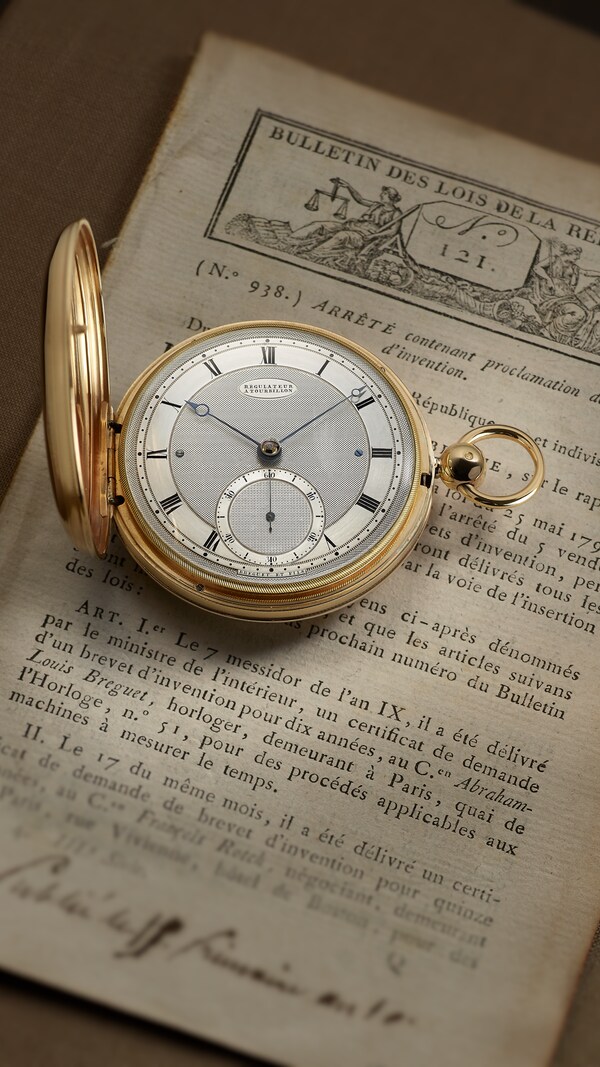
Up:
Breguet watch No. 2567 mentioned in the official bulletin of the laws of the French Republic, announcing the obtention by Abraham-Louis Breguet of the tourbillon regulator patent.
A challenge and the meaning of a word
In the course of his travels and the time spent with Swiss, English and French watchmakers, Breguet’s shrewd thinking and observations had enabled him to perfect his understanding of the factors liable to impair the precision of a timepiece.
He took an interest in metals, lubricants, various types of escapement, jeweling… And as always, he did a lot of things at the same time.
Nonetheless, one particular thought kept cropping up: clearly, he could not resolve all the issues facing his profession, but he had a solution that could prove decisive.
As a keen connoisseur of the laws of physics, he observed the effects of gravity on watches, worn at the time along the body and hence in a mainly vertical position.
An original device might be able to compensate for the laws of physics that perturb the inner workings of a watch and impair its rate regularity.
While Breguet could not alter gravity, he could perhaps ‘tame’ its effects.
Who but Breguet could have proposed such a project?
It required a solid grasp of science as well as an optimistic streak.
This specific set of circumstances resulted in a project that its inventor named “Tourbillon.”
The word is frequently misinterpreted and its astronomical meaning has long been forgotten.
According to the major dictionaries of the 19th century, among them The Descartes Dictionary and Diderot and d’Almbert’s Encyclopédie, the word referred either to a planetary system and to its rotation on a single axis, or to the energy that causes the rotation of the planets around the sun.
This sense of the word is far from its modern meaning of “violent rotation” or “uncontrollable storm.”
A man of the Enlightenment, Breguet thus chose a word that someone who observed the world before imitating it would choose.
In this, he resembles the 18th century philosophers who considered watchmaking to be the creation of a microcosm.
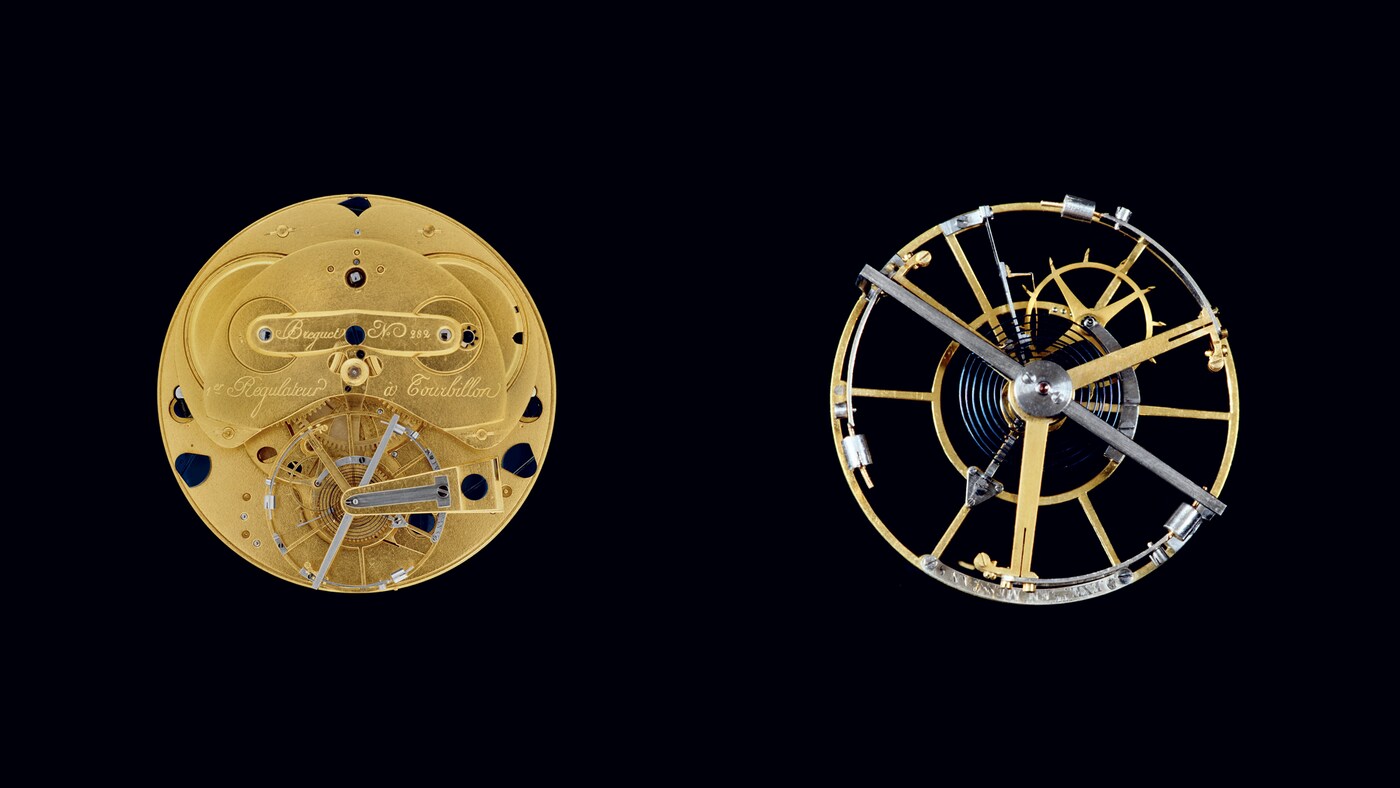
It is in fact hard not to envision a tiny, tidily ordered constellation in this mechanism, which assembles the devices for the regulation (balance spring) and distribution of energy (escape wheel and lever) within a mobile carriage that spins as constantly as any planet…
Up:
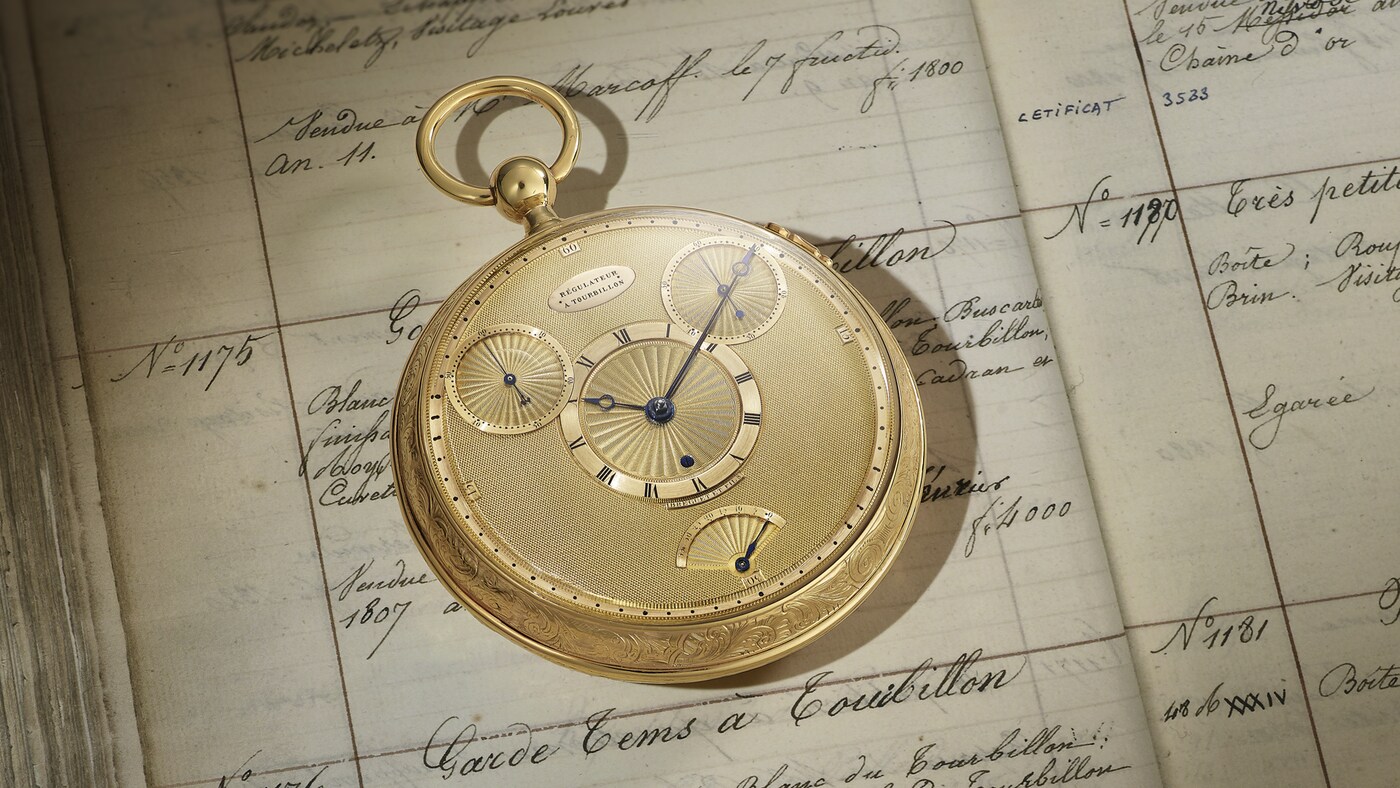
Breguet Tourbillon watch No. 1176 sold to Count Potocki in 1809. It took nearly seven years to make. Its cage performs a rotation in four minutes.
Letter to the Minister and Dossier
In 1801, France was (already) under the rule of powerful, bureaucratic authorities, and in order to obtain his patent, Breguet had to overcome the hurdles posed by the application file, which had to include an illustrative watercolour plate and be prefixed by a letter to the Minister of the Interior.
Citizen Minister,
I have the honour of presenting to you a dissertation containing the description of a new invention for the use with time-measuring devices. I call this device the Tourbillon Regulator […]By means of this invention, I have successfully compensated for the anomalies arising from the different positions of the centres of gravity and the movements of the regulator. I have also succeeded in distributing the friction over all areas of the circumference of the pivots of this regulator and the holes in which these pivots move.
This is done in such a way as to ensure that the lubrication of all chafing parts should remain constant despite the thickening of oils. Lastly, I have eliminated many other errors that impair the precision of the movement […]
It is after due consideration of all these advantages, of the advanced means of production that I have at my disposal, and of the considerable expense I have incurred in procuring these means, that I have decided to claim the right of establishing the date of invention, thus ensuring compensation for my sacrifices.
Respectfully yours,
BREGUET
A long journey?
Assuming that the idea for the Tourbillon took root in Breguet’s mind between 1793 and 1795 (during his time in Switzerland), six years went by between his return to Paris and the granting of the patent on June 26, 1801.
And six more years elapsed between obtaining the patent and the first sales, which took a long time to start…
While this might seem a long time, even today certain watchmaking developments still take many years to come to fruition.
This suggests that Breguet had perhaps underestimated the difficulties of fine-tuning this new type of regulator – another result of his habitual optimism – and that the “considerable expenses” and “sacrifices” that he mentioned in his letter to the Minister of the Interior did not end in 1801…
In other words, it took Abraham-Louis Breguet more than ten years, not only to develop his extremely complex invention, but also to make it reliable.
The master watchmaker mentioned his invention at every opportunity and promoted it at the French industrial fairs held in Paris in 1802, 1806 and 1819.
He praised it as a mechanism enabling timepieces to “maintain their accuracy, irrespective of whether the position of the watch is upright or tilted”, or, in other words “the ability to maintain the same rate in all vertical positions, and to achieve results similar to the rate in a horizontal position”.
Convinced of the significance of the invention, which could be installed in different types of timepieces, Breguet and his staff went on to produce 40 Tourbillons between 1796 and 1829 – plus nine others which were never finished and appeared in the ledgers as written-off, scrapped or lost…
Famous customers and mode of operation
Thorough research of the available archive materials has made it possible to draft a precise list outlining the history of each one of these pieces.
There are 35 watches, more than half of which possess a carriage that revolves at a rate of once every four or six minutes, whereas the patent describes a carriage revolving every minute.
There are also five other unique items: a Sympathique clock and a clock and watch set, a large-scale model for demonstration purposes, a naval chronometer and a travel clock…
Unsurprisingly, Breguet's clientele included several monarchs: George III and George IV of England, Ferdinand VII of Spain, Russian aristocrats (Princes Yermoloff, Gagarin, Repnin, Demidoff and others) as well as prominent European personalities from Poland (Count Potocki), Prussia (Prince Hardenberg), Italy (Count d’Archinto, G.B. de Sommariva), Hungary (Baron Podmaniczky) and Portugal (Chevalier de Brito).
Many of these buyers had known Breguet for a long time and were true connoisseurs of the watchmaking of their time.
George III and his son the Prince of Wales had been customers since at least 1790.
But on the Tourbillon No. 1297 acquired in 1808 by George III, it is the name of Recordon, Breguet’s agent in London, that appears on the dial and plate, a discreet Breguet signature being visible only under the Tourbillon carriage.
This may have been for diplomatic reasons, since displaying a watch signed by a watchmaker working in Paris would not have been appropriate at that time for the head of a nation at war with Napoleon...
It was not until the fall of the French Empire that the future George IV, then Prince Regent, acquired the Tourbillon No. 1252.
As for members of the Spanish royal family, they had also known Breguet for a long time, and it was from their exile in France that the man who was to become King Ferdinand VII after the fall of Napoleon and his brother Joseph Bonaparte (who was installed on the Spanish throne) purchased Tourbillon No. 2514.
Little mention has been made until now of the fact that a quarter of these 40 Tourbillons were likely used for naval purposes – in other words, they were bought by ship owners or sailors and used for navigation at sea and for calculating longitude.
An explorer in Africa used the watch for the same purpose and Thomas Brisbane reached Australia with his.
No less than four Tourbillons passed through the hands of Joseph Ducom, Breguet’s agent in the port of Bordeaux.
In 1815, the future French admiral Charles Baudin was loaned a “Tourbillon marine clock with constant escapement” for experimental purposes.
Probably satisfied, he bought it the following year.
Some pieces were used on the global ocean for half a century.
Several pieces even belonged to leading scientists.
Clearly, and in line with Breguet’s own classification, the Tourbillon falls into the category of watchmaking for scientific use rather than watchmaking for civilian use.
These buyers understood and benefited from the increased precision offered by the mechanism.
Up:
Started in 1796, the Breguet No. 282 watch is the first known tourbillon. It remained in the company and was finally sold in 1832 by Breguet’s son, Antoine-Louis.
Right:
Started in 1796, the Breguet No. 282 watch is the first known tourbillon. It remained in the company and was finally sold in 1832 by Breguet’s son, Antoine-Louis.
Up:
Started in 1796, the Breguet No. 282 watch is the first known tourbillon. It remained in the company and was finally sold in 1832 by Breguet’s son, Antoine-Louis.
Long-term success
Appointed with a gold or silver case, these Tourbillons are works of art whose aesthetic matches their technological brilliance.
Although they were considered to be purely scientific objects, they were given a sophisticated finish.
The dials of the Tourbillons are among the most beautiful in the history of the House.
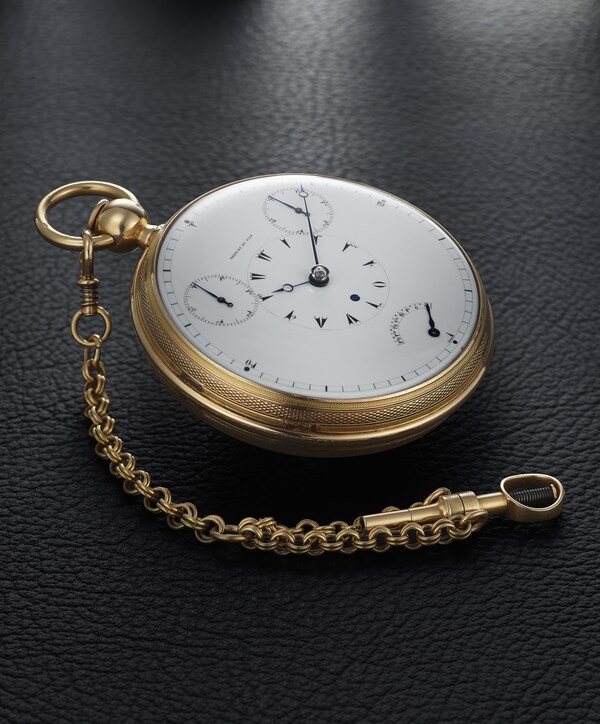
Perfect readability – a characteristic of any Breguet watch – and dials whose functionality was enhanced by gold, silver or enamel: running seconds, seconds on demand, power reserve, sometimes even a thermometer… no two models were the same.
The Tourbillon mechanism could be adapted to several types of escapements and watches.
Production, on the other hand, was very slow.
In 1802, once the patent had been obtained, work began on six Tourbillon timepieces. The creation of each of these pieces would take between five and ten years.
In 1809, taking advantage of his booming business and hoping that the opening of his branch in St. Petersburg would also open the Russian market for him, Breguet started work on the production of 15 new Tourbillons, half of which were completed after 1814.
The marine Tourbillon chronometer would remain unique, as would the travel clock, the last Tourbillon from the original series.
Was this because the making of these pieces was fraught with difficulty, the time required for fine-tuning was lengthy, and the skilled labor capable of creating them was scarce? Probably so…
As for the prices (in French gold francs of the time), they do not seem excessive, far from it.
They are indeed within the range of “Breguet prices”, as is the margin taken by the Maison: the simple models with a silver case and a tourbillon carriage rotating in one minute were sold for around 2,000 francs; while models with complications, including a running seconds hand and a small seconds display that could be activated on demand, a finely decorated gold case, and a tourbillon carriage turning in four minutes, went for between 3,000 and 5,000 francs.
While the Tourbillon delighted Breguet’s followers, it did not offer its creator a reasonable economic trade-off for his efforts.
The explanation behind his tireless pursuit of these endeavours doubtless lies elsewhere, in the fact that Breguet’s life-long quest was to improve the functioning of timepieces.
In the end, it led him to... simplicity!
The Tourbillon, the shooting star in the watchmaking sky, the brilliant idea borne of Enlightenment thinking, faded – but it never disappeared completely.
It had not said its last word.
A revered and inspiring heritage
Bearing precious testimony to a fertile past, the Tourbillons dating from the time of their inventor have always fascinated the great watchmaking collectors and historians, from Sir David Salomons to George Daniels.
A dozen or so models are preserved in museums: three belong to the collections of the Breguet Museum, five are kept in the British Museum and other museums in England, while the others can be found in Italy, Jerusalem, and New York.
A further 15 are in the hands of private collectors, and in recent years, two have been bought at auction.
All in all, almost 30 out of the 40 original timepieces have survived, a proportion that speaks volumes regarding the fascination they exercise.
A swift and unexpected resurgence
The House of Breguet preserved the timepieces created by its founder with great care.
In 1890, it once again made such a model for Tsar Alexander III of Russia, a Tourbillon travel clock.
Thirty years later, it began producing several new Tourbillon pocket watches that were sold from the 1920s into the 1950s.
One of them was a one-of-a-kind Tourbillon model with minute repeater and split-seconds chronograph.
Only a small number of insiders were aware of this.
The revival, when it came at last, was as swift as it was unexpected.
Although designed for pocket watches, which were generally worn upright, Abraham-Louis Breguet’s invention made its comeback in the mid-1980s, within the much smaller cases of wristwatches that were far less sensitive to gravity.
This paradoxical situation has continued for the past 40 years!
Enhanced precision is no longer the chief asset.
Enlightened connoisseurs wish only to contemplate the beauty of an invention and to delight in the finest expression of horology, when – like A.-L. Breguet – it composes a symphony of science, art and poetry.
Up:
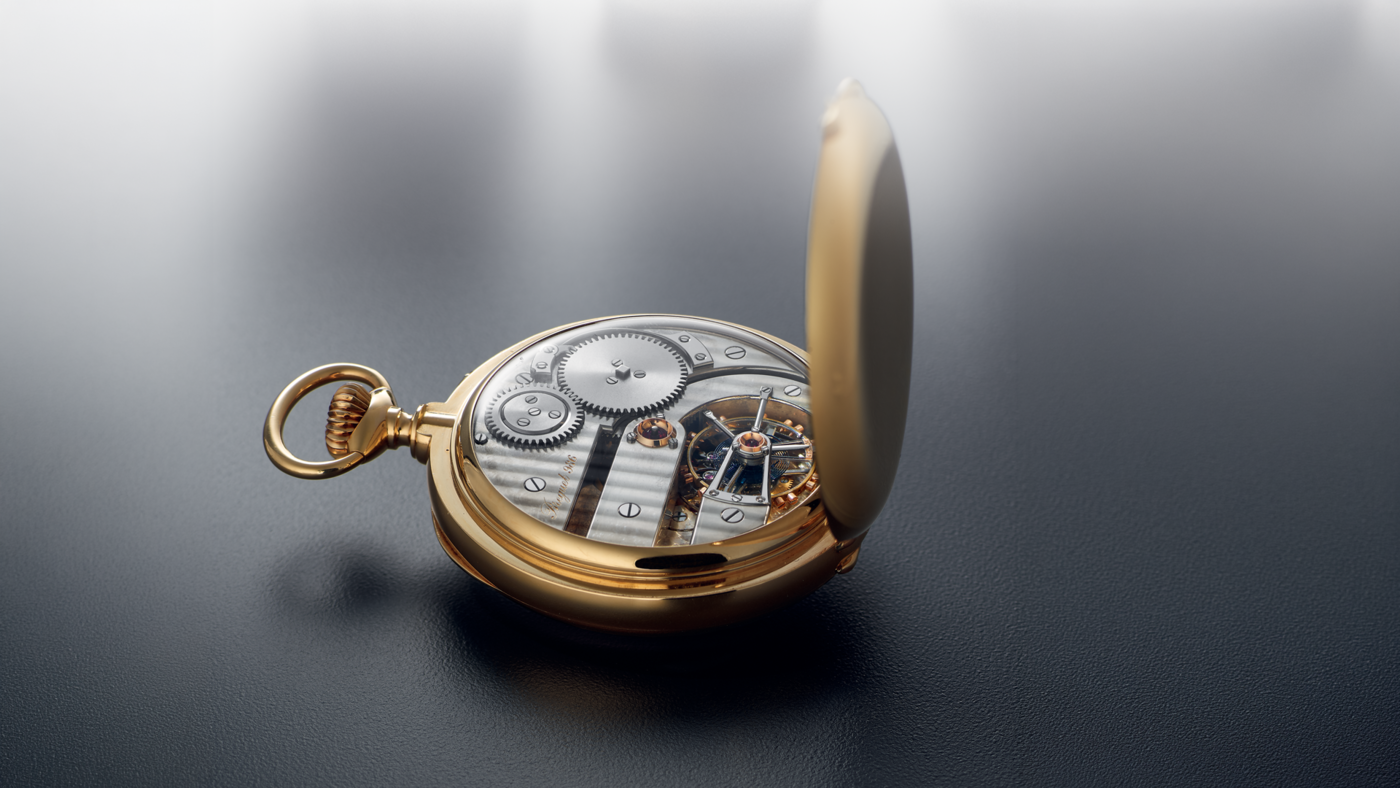
Breguet watch No. 986, sold in 1926 to Jean Dolfus. It earned a Bulletin de première classe and a first prize from Neuchatel Observatory.
Right:
Breguet watch No. 986, sold in 1926 to Jean Dolfus. It earned a Bulletin de première classe and a first prize from Neuchatel Observatory.
Up:
Breguet watch No. 986, sold in 1926 to Jean Dolfus. It earned a Bulletin de première classe and a first prize from Neuchatel Observatory.