
MARINE CHRONOMETRY and maritime navigation
by Emmanuel Breguet
Abraham-Louis Breguet, as he himself said, took an early interest in marine chronometry, and this is hardly surprising in light of his determination and his ability to address all areas of horology. A hand-written document recapitulating his inventions, divided into 27 sections and addressed to the French Conseil des Arts et Manufactures in 1796, mentions that “the marine watches and clocks he made in small quantities and simply for his personal instruction were a great success in Spain.” Further on the document, we read “At the present time, Breguet is dealing with four or five extremely important inventions. One of them is an extremely simple marine clock that is very easy to repair and of which he will be able to supply 10 or 12 per month.”

Nonetheless, despite these statements, there are virtually no traces of marine chronometers in the production registers and sales ledgers of the Maison prior to 1806. In that year and the following years, between one and four such models emerged from the company annually. This represents a very small proportion of overall production, although the owners were prestigious, such as the Florence Observatory which acquired two “marine clocks” in 1812.
It was not in fact until the reign of Louis XVIII, after the fall of Napoleon I, that another key episode occurred that truly marked the horologist’s entry into the domain of maritime navigation.
This first date was December 10th 1814, when a royal decree signified Breguet’s appointment as a member of the Bureau des Longitudes.
The Bureau des Longitudes in Paris, which still exists to this day, was founded by Henri Jean-Baptiste Grégoire (known as Abbé Grégoire) on June 25th 1795 (7 Messidor year 3). It was composed at the time of around 15 members (astronomers, geophysicists, physicists), among whom was a horologist.
Its main aims were to solve the astronomical problems involved in determining longitude at sea (hence its name); to calculate and publish the ephemeris reference work (indicating the occurrence of various celestial phenomena) and a directory “suitable for setting those of the Republic;” to organize scientific expeditions in the fields of geophysics and astronomy; and to serve as a consultative committee on certain scientific issues. The prestigious Paris Observatory was placed under the supervision of the Bureau des Longitudes from 1795 to 1854. Within the Bureau des Longitudes, Breguet rubbed shoulders with assorted members of the French Academy of Science – Laplace, Delambre, Biot, Arago and Prony – and would strike up friendships with several of them.
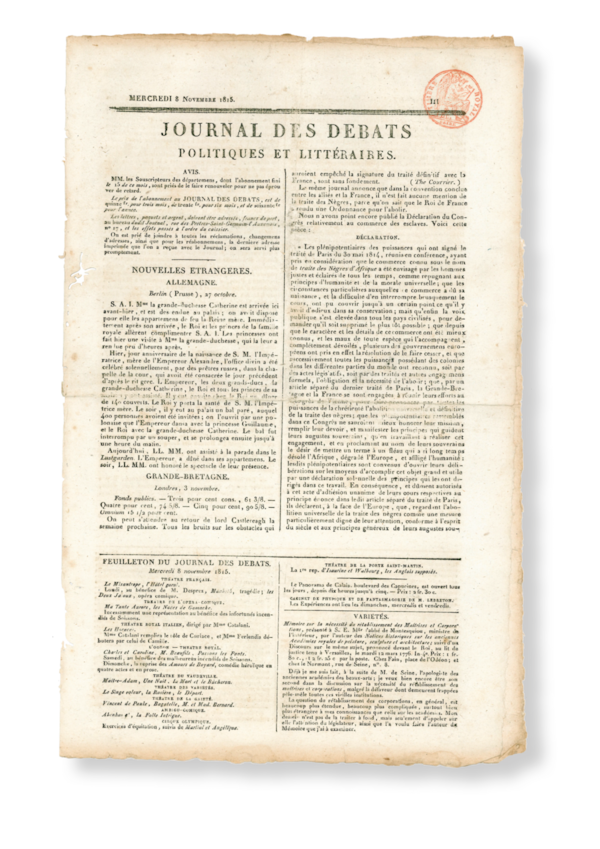
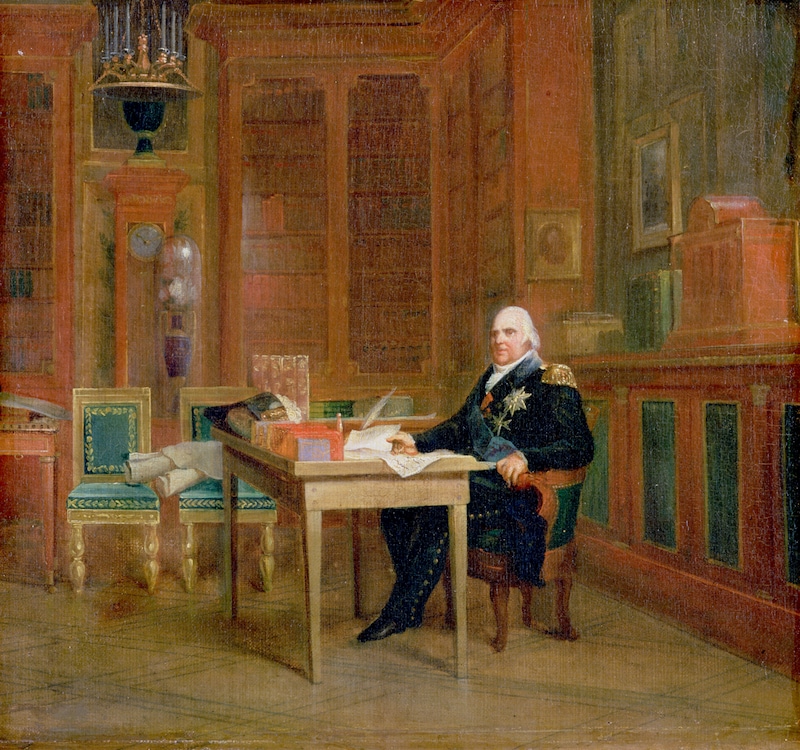
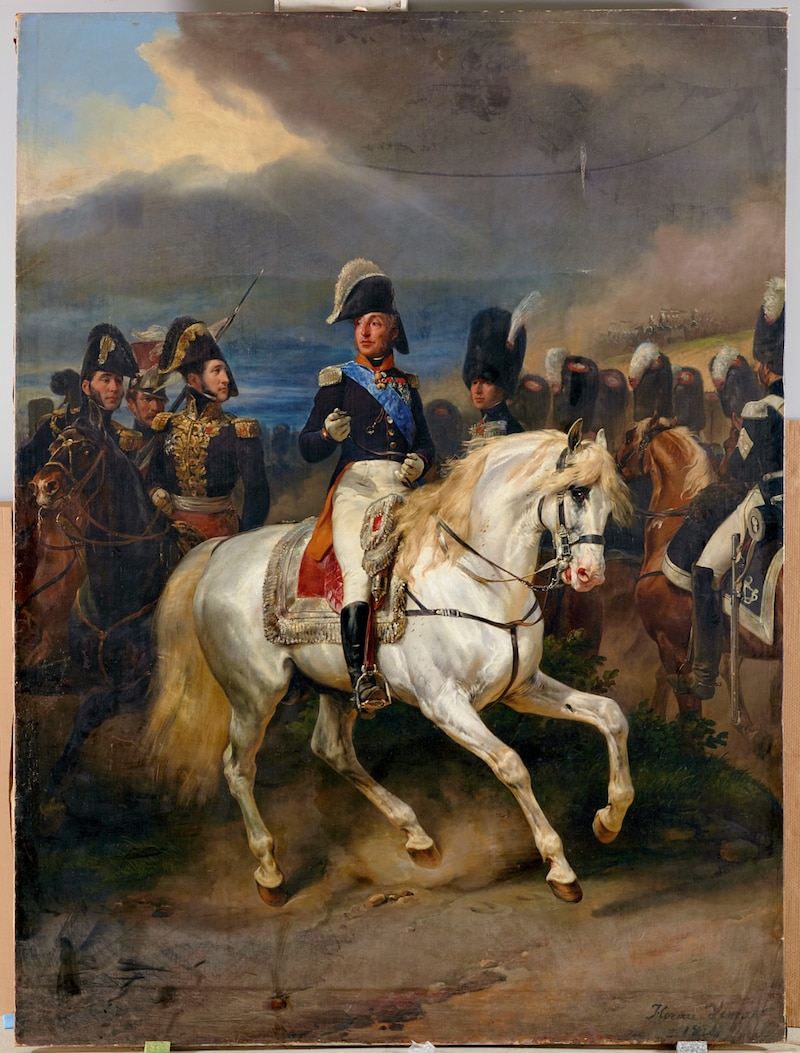
The second key milestone, following on from the first, was when King Louis XVIII, by a royal ordinance issued on October 27th 1815, awarded Abraham-Louis Breguet the official title of Horloger de la Marine Royale (Watchmaker to the Royal Navy), which was undoubtedly the most prestigious title a watchmaker could hope to receive, given that the very notion of maritime horology implied considerable knowledge and rigorous scientific discipline. This was a personal and lifetime title, which therefore legally applied to Abraham-Louis Breguet and not to his firm. It became vacant in case of its holder’s resignation or death.
The maestro in fact succeeded Louis Berthoud, who died in 1813 and had himself succeeded his uncle Ferdinand Berthoud, when the latter resigned in 1802 due to his advancing age. The horloger-mécanicien de la Marine (mechanic-horologist by appointment to the Navy), to use the exact term, became the official – but non-exclusive – supplier to the Navy. He was thus obliged to meet State orders at the agreed prices and within stipulated deadlines. There was in theory no remuneration attached to the function, but the government could decide otherwise if, for example, the abundance of orders from the Navy obliged the watchmaker to neglect other activities.
Breguet thus experienced a period of significant recognition, culminating the next year with his entrance to the Academy of Science, whose meetings he attended with great regularity until the very end of his life. This figure so well known throughout Europe, so greatly appreciated from London to Madrid and from St. Petersburg to Constantinople, thus at last became an official public figure in France, his adopted country!
Thus appointed Watchmaker to the Royal Navy at the mature age of 68, Abraham-Louis Breguet nonetheless lacked experience in producing this type of timepiece in quantities. He therefore applied himself to the task and began an authentic series by following the letters of the alphabet. It is nonetheless interesting to note that the French Royal Navy seemed to have no lack of chronometers at the time, since it was in no hurry to place any orders with the newly appointed horologist. Admittedly, the Navy was doubtless still receiving deliveries of the models it had ordered while Louis Berthoud was alive and which had been finished by his workers. Breguet, who complained about the situation to the corresponding minister, had to wait until 1820 to deliver his first models to the Navy, apart from the “large Marine 8-day clock 2Y,” bearing No. 3303 and sold to “His Royal Highness the Grand Admiral of France,” better know as the Duke of Angoulême.
Meanwhile, before supplying any clocks to the Royale, meaning the military, Breguet worked to create commercial outlets for his products with the merchant navy. In doing so, he once again demonstrated his consistently active nature and leveraged his network of contacts in the main French ports and circles linked to maritime navigation.
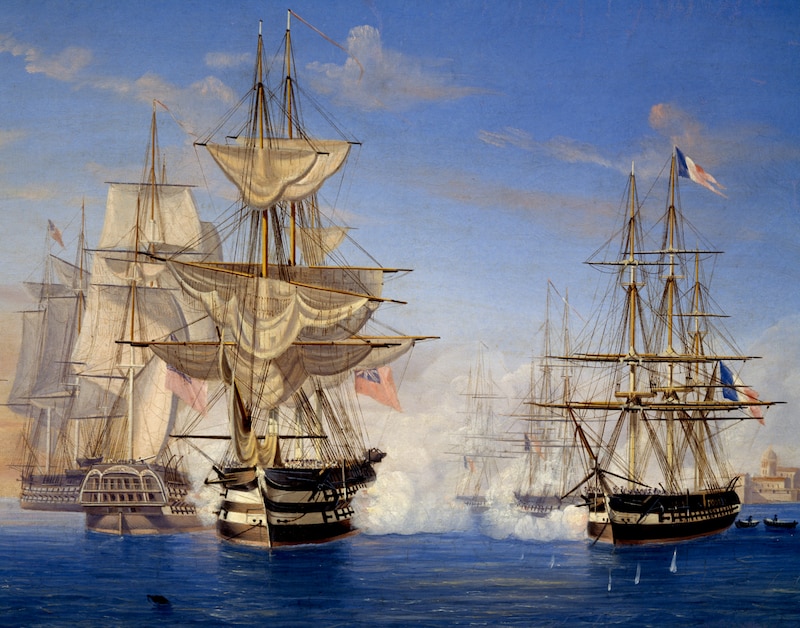
In quantitative terms, a look at the sales ledgers shows that, from 1815 to 1823, the year Abraham-Louis Breguet died, the Maison delivered the respectable number of 78 models described as marine watches or clocks. Out of this total, only 22 were supplied to the Royal Navy, and the other 29 had been negotiated by the agents Breguet had selected in the main port cities. Their names were Ducom in Bordeaux, Ferey in Le Havre and Guepratte in Brest. These individuals that Breguet contacted to make known his new specialty were not merchants as such. While François Ferey was a watchmaker in Le Havre and a keen connoisseur of models designed for the Navy of which he handled the maintenance; Joseph Ducom was an astronomer, a professor of hydrography in Bordeaux, and a maker of maritime observation instruments; while the mathematician and astronomer Charles Guepratte was also Director of the Brest Observatory from 1810 to 1852. The House of Breguet subsequently enlisted an agent in Nantes, on a similar basis. His name was François Huette, an optical specialist and also an astronomer. These scholars thus became ambassadors for the company in their respective regions, and although their mode of remuneration is not clearly specified, it was probably about 5% of the sales price of a chronometer, which on average cost about 2,400 Francs.
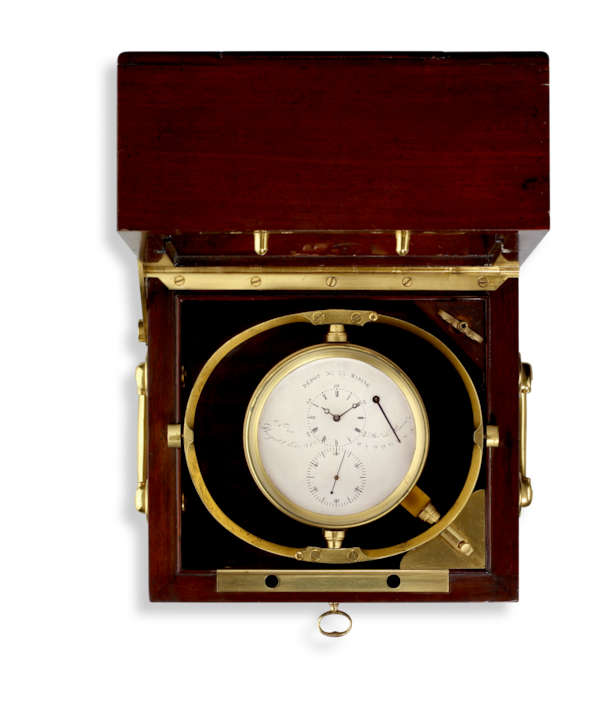
In quantitative terms, a look at the sales ledgers shows that, from 1815 to 1823, the year Abraham-Louis Breguet died, the Maison delivered the respectable number of 78 models described as marine watches or clocks. Out of this total, only 22 were supplied to the Royal Navy, and the other 29 had been negotiated by the agents Breguet had selected in the main port cities. Their names were Ducom in Bordeaux, Ferey in Le Havre and Guepratte in Brest. These individuals that Breguet contacted to make known his new specialty were not merchants as such. While François Ferey was a watchmaker in Le Havre and a keen connoisseur of models designed for the Navy of which he handled the maintenance; Joseph Ducom was an astronomer, a professor of hydrography in Bordeaux, and a maker of maritime observation instruments; while the mathematician and astronomer Charles Guepratte was also Director of the Brest Observatory from 1810 to 1852. The House of Breguet subsequently enlisted an agent in Nantes, on a similar basis. His name was François Huette, an optical specialist and also an astronomer. These scholars thus became ambassadors for the company in their respective regions, and although their mode of remuneration is not clearly specified, it was probably about 5% of the sales price of a chronometer, which on average cost about 2,400 Francs.
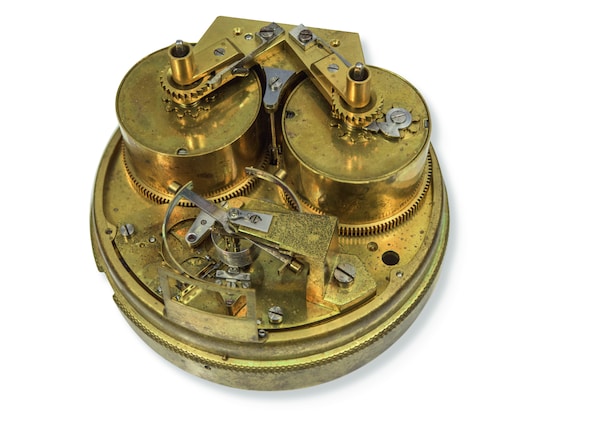
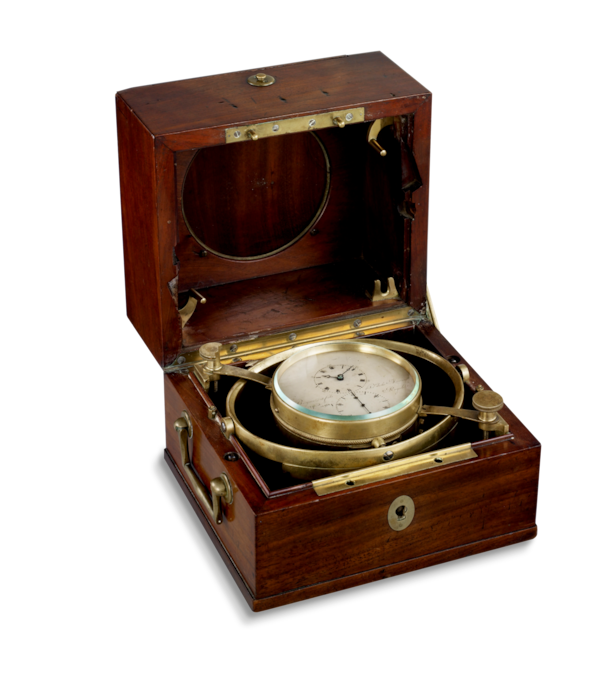
Official orders ensued shortly thereafter, as confirmed by letters written by Breguet which, in accordance with the established procedure, replied to the Minister of the Navy by acknowledging receipt of the order and of the agreed price, and also undertook to pay over 3% of the total amount of the order to the Caisse des Invalides. These were mostly fairly traditionally looking marine clocks featuring a rather large movement – generally with two barrels and equipped with a detent-type escapement – housed in a cylindrical brass case, itself secured inside a strong wooden box by means of a gimbal suspension system which served as a stabilizer and shock absorber. Some orders mention a “pocket chronometer,” a as in this letter dated September 18th, 1820.
“I, the undersigned, Breguet (Abraham-Louis)… undertake to supply, in accordance with the decision of His Excellency the Navy Minister on August 17th last, the pocket chronometer No. 3502 (silver case) for the sum of fifteen hundred francs, of which I agree that a mandatory 3%, as stipulated by all contracts signed with the Navy Ministry, shall be paid over to the Caisse des Invalides.”
Business relations between the Maison Breguet and the Navy continued thereafter with no interruption. In addition to the above-mentioned watches delivered during the founder’s lifetime, 130 were sold between 1824 and 1833 under the management of his son Antoine-Louis, and many others were supplied throughout the 19th century and right the way through to 1960.
In some cases, the archives also mention the destination of a given timepiece: either a ship, or the name of a person, affording fascinating glimpses of the world of grand maritime (and sometimes terrestrial) exploration during the 19th century.
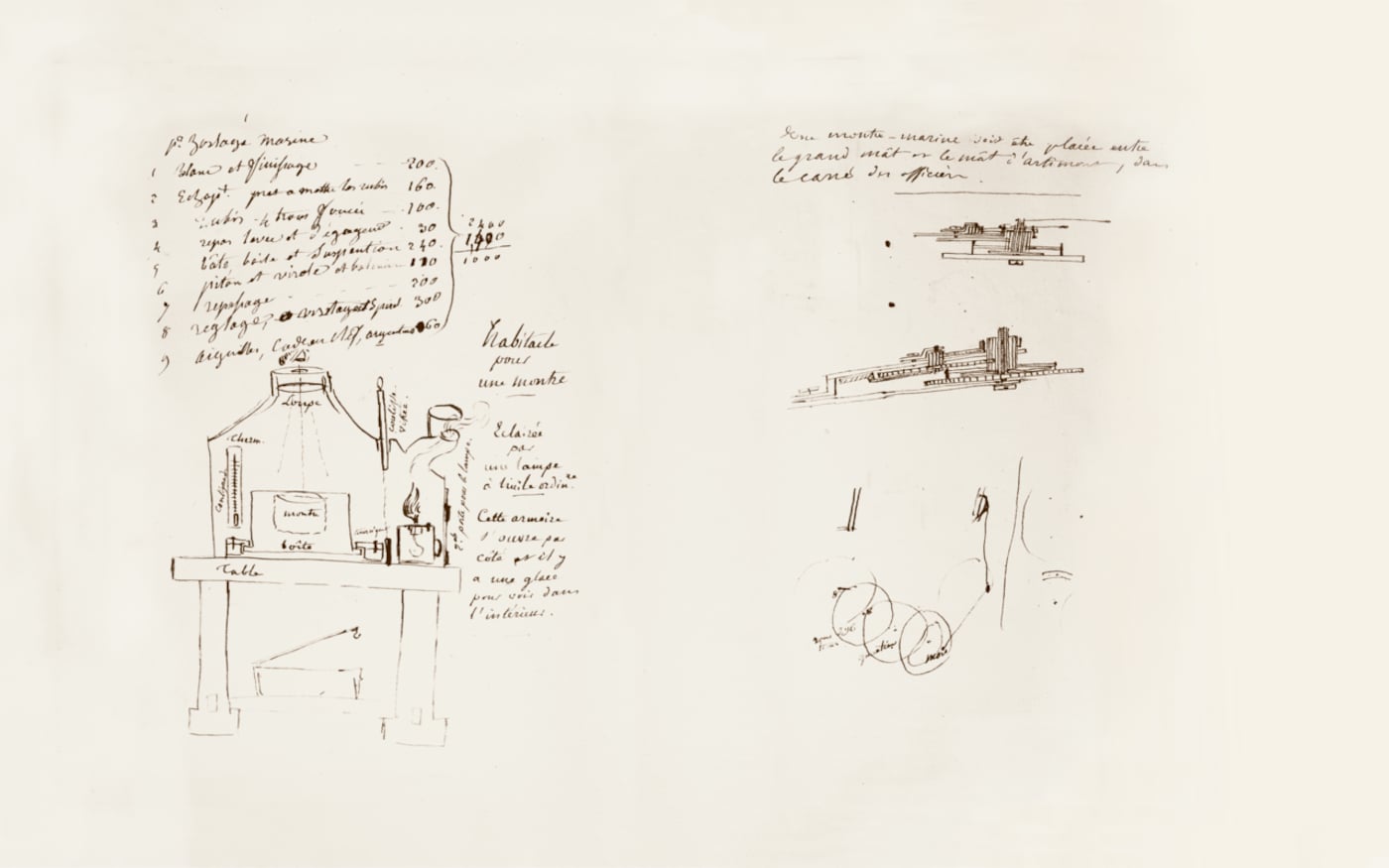
The Breguet marine clock No. 2868 was sent to Louis de Freycinet (1779-1842), who took it with him on his famous round-the-world voyage between 1817 and 1820.
Marine clock No. 2824 was entrusted to General Badia (1766-1818), a great explorer of inland Africa and the Middle East. One may also mention the case of the above-mentioned pocket chronometer No. 3502, intended for the future admiral Louis Le Goarant de Tromelin (1786-1867), a tireless sailor to whom we owe the discovery of several Pacific islands. There was also marine clock No. 3588, which was taken aboard the Théris frigate by Hyacinthe de Bougainville (1781-1846) for his expedition around the world from March 1824 to June 1826.
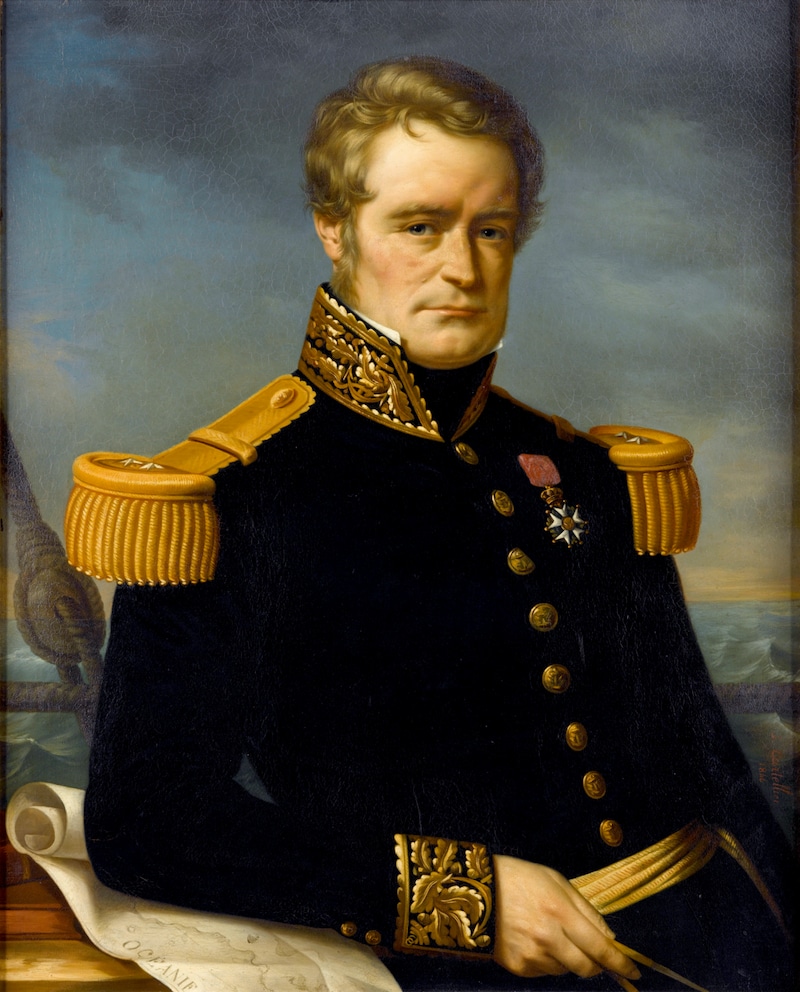
As for the Breguet No. 4367 timepiece, described as a regulator and sold to the Navy Ministry on May 21st 1838 “for an expedition to the (South) Pole, complete with two cases in mahogany, one in walnut wood and one in pinewood for the packaging,” it accompanied Jules Dumont d’Urville (1790-1842) on his last expedition and became the very first time measurement instrument to reach Antarctica in January, 1840!
These few examples among any others are highly evocative and the stuff of dreams. They also provide an opportunity to grasp the considerable burden of responsibility resting on the shoulders of marine horologists of that era. Rigorous standards and stringent discipline were the order of the day and were constantly recalled in an extremely explicit manner. Breguet ended his letter dated December 16th 1820 and acknowledging receipt of four new orders with these words: “I also undertake to take back these watches, meaning one or several of the four if, within a three-month period, their astronomically observed rate is not deemed sufficiently regular.”
Well accustomed to challenges and always eager for new experiences, Abraham-Louis Breguet found in the exercise of the art of Watchmaker to the Navy an activity worthy of his talents, as well as undoubtedly yielding great intellectual satisfaction. This is certainly what would expect from a man who never lost an opportunity in his writings to explain that research was not only intended for “civilian” use, but also for “the use of scientific disciplines,” among which he regarded astronomy and maritime navigation as paramount.
Nonetheless, as the head of a company faced with cost price issues, he shared an important observation in his famous Traité d’Horlogerie (Horological Treatise) manuscript, evoking the costs entailed in this quest for perfection, and the impossibility of passing on these costs to the products. In reference to watches and clocks intended for the navy and for astronomy, he stated, “We strove to verify and clarify the principles involved and to perfect the means of ensuring surety and constancy, while maintaining moderate pricing.” And in order to make his point even more clearly, he wrote of “the scholars and sailors whose fortune is rarely proportionate to their need of perfect instruments”. This remark is of truly timeless relevance.
While one can be sure that maritime horology never made the fortune of the Maison Breguet, it strongly contributed to its enduring worldwide reputation. And in this early 21st century, as if echoing this long page of history, a line inspired by this tradition bears the name “Marine,” and each of the watches in this collection bears the evocative inscription “Horloger de la Marine”!