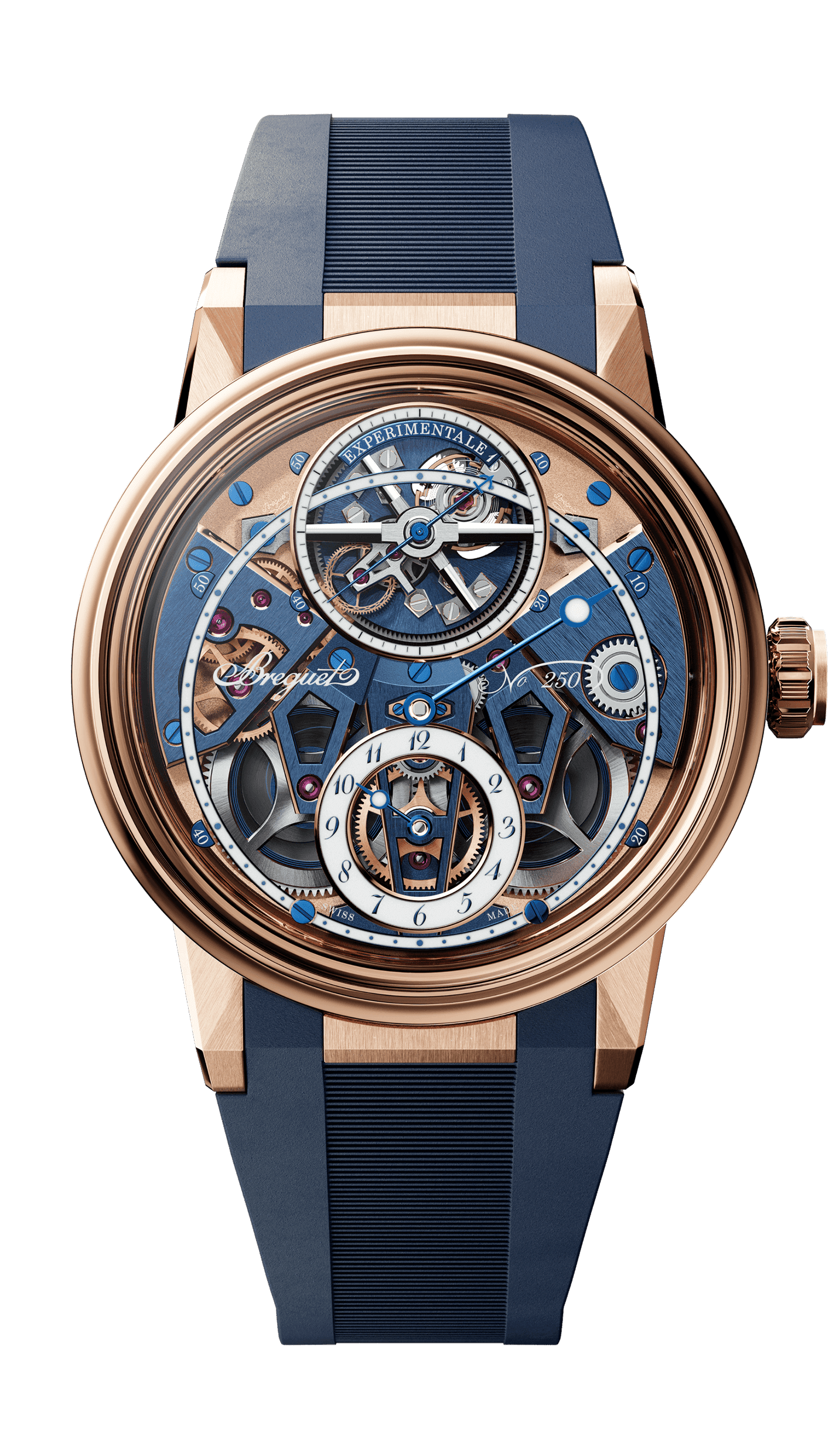
Breguet Expérimentale No. 1
Manufacture Breguet announces the creation of a line that will incorporate the latest innovations from its Research and Development department. Named “Expérimentale”, it is initially being introduced through a Marine wristwatch featuring an innovative and daring design.
Research and developmentat the heart of Breguet
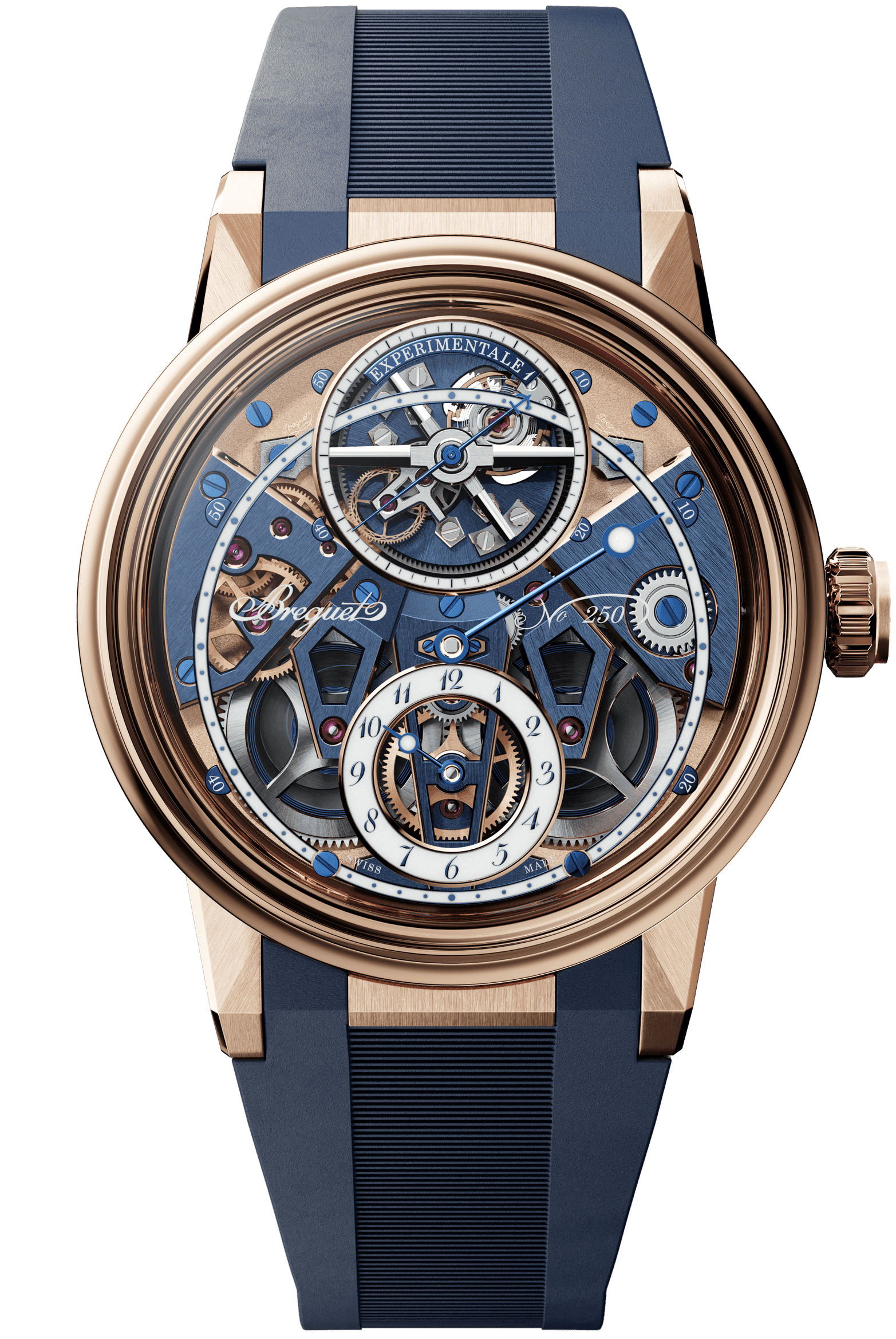
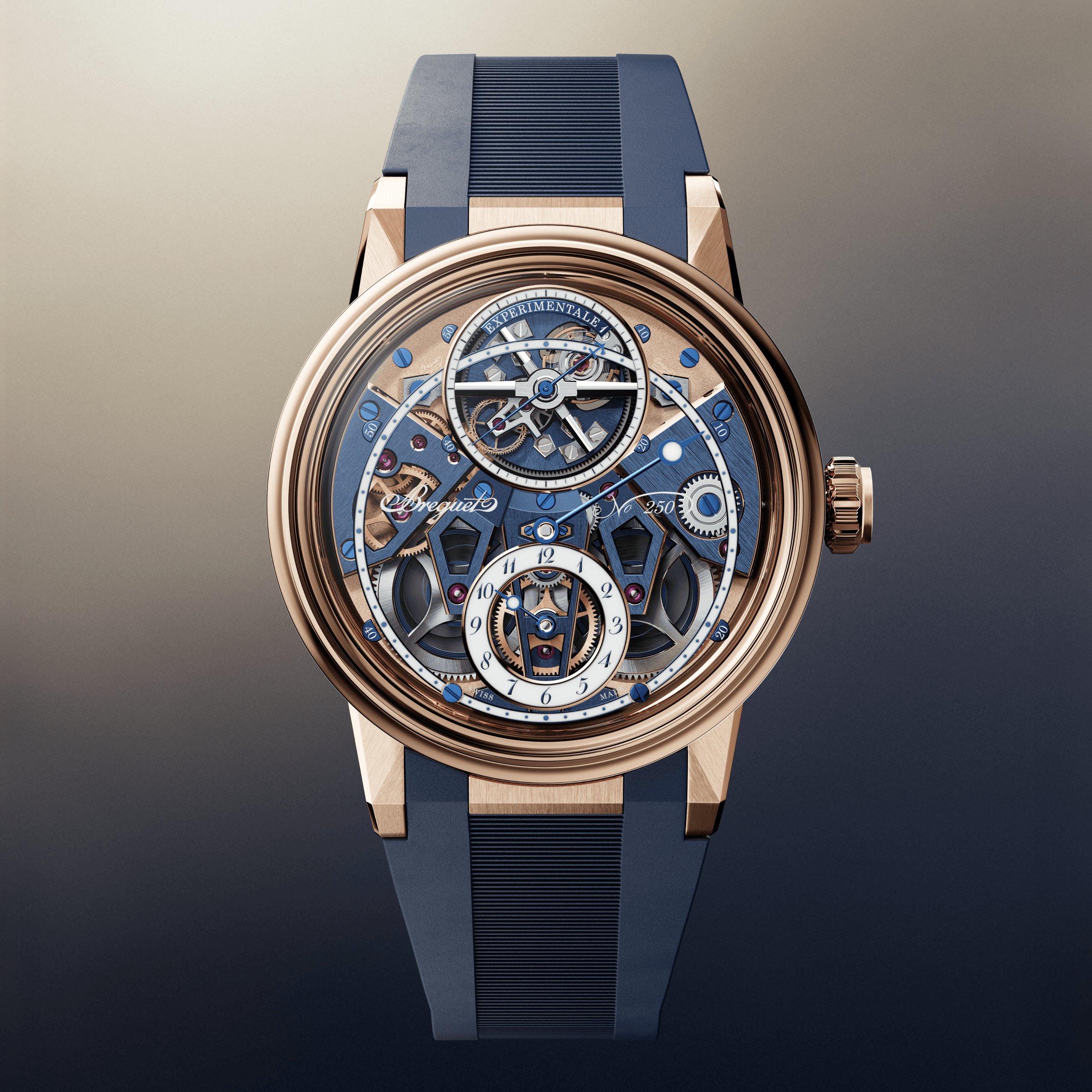
This timepiece crafted in Breguet gold is equipped with the very first high-frequency (10 Hz) tourbillon with a magnetic escapement and delivering constant force to the balance. It is certified by the Breguet hallmark.
R&D have been core to numerous Breguet creations for 250 years. This spirit was instilled by Abraham-Louis Breguet himself, who was responsible from 1775 onwards for most of the watchmaking innovations of that era: the tourbillon, the perpétuelle watch, the natural escapement, the constant-force escapement, the “observation” seconds counter (which gave rise to the chronograph), the shock absorber, the Breguet balance-spring with its terminal curve, the gong-spring (for chiming watches ), the first wristwatch, etc.
To give shape to this approach based on continuous progress, the Manufacture decided to develop a collection in parallel with its existing ones and named Expé rimentale. This series of special timepieces pays tribute to A.-L. Breguet’s creations that all under went an experimental phase.
This experimental collection is designed to showcase the brand’s latest technical and aesthetic developments. It offers a glimpse of what Breguet watchmaking will look like in the future. For collectors, it is also an oppor tunity to be among the first to acquire high-end timepieces in strictly limited series, of which the scientific content will be developed in subsequent collections.
Expérimentale 1,pioneering by nature
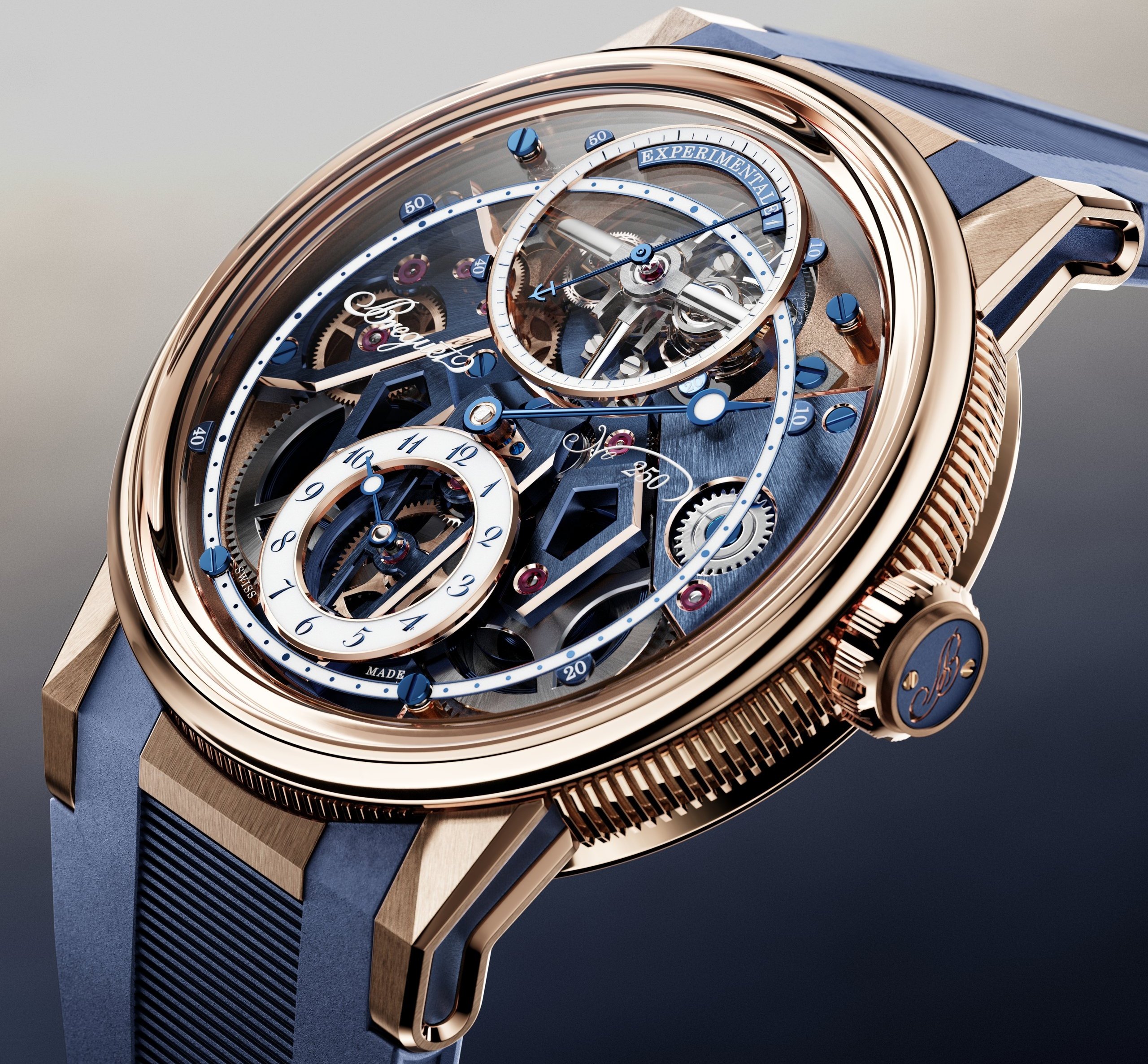
While the first timepiece in this new collection marks the final chapter in Manufacture Breguet’s 250th anniversary celebrations, it also represents the first chapter of its future. An inaugural creation whose purpose is to pave the way for the House going forward.
The Expérimentale 1 is not a spontaneous creation, stemming instead from many years of R&D work carried out behind the scenes and that has given rise to the current watches, notably the Classique, Tradition, Marine and Type XX collections.
The Expérimentale programme aims to highlight this R&D shedding light on the entire field of horology through its work on materials, electromagnetism, vibra tory mecha nics and acoustics. Science in the broadest sense of the term, connecting with design.
Highlightingremembrance
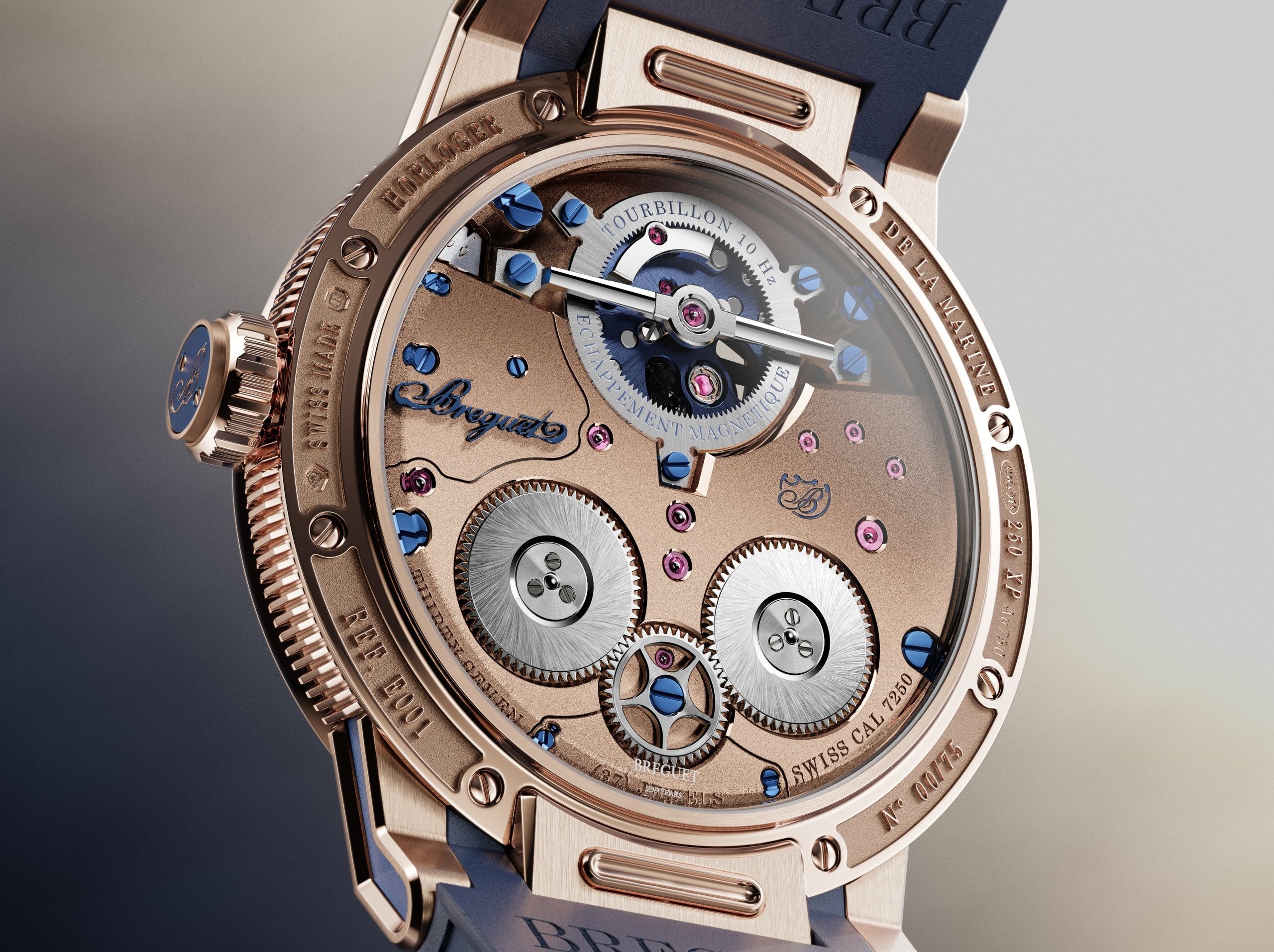
For this first instalment, Breguet has fulfilled two objectives. The first, fundamental goal underpinning all technical endeavours is the quest for precision. The second is to build a bridge between legacy and the future. This approach is being rolled out as part of the House’s 250th anniversary celebrations. Highlighting the historical significance of the Expérimentale 1 seemed an obvious choice.
These ties with the past are expressed by making this timepiece part of the Marine collection. The aim is to recall that, after his appointment to the Paris Bureau des Longitudes in 1814, A.-L. Breguet was awarded the title of Horloger de la Marine Royale (Watchmaker by appointment to the Royal Navy) by Louis XVIII.
This distinction was the most prestigious a watchmaker could possibly receive, as the very notion of maritime horology required scientific expertise. The Expérimentale 1 represents a continuation of this tradition, showcasing technical breakthroughs that are already shaping the future of Haute Horlogerie
Swipe to discover
Setting the terms
of the clockwork equation
The quest for accuracy cannot be reduced to one sole problem with a single solution, instead combining at least three variables.
The first is the consistent amplitude of the balance. The latter is located downstream from the barrel, whose torque decreases as the power reserve is depleted. It is therefore inherently very difficult for the balance to maintain a constant amplitude if the energy it receives is not consistent.
The second is the influence of Earth’s gravity, which particularly affects the entire regulating organ (balance and hairspring), thereby impacting its performance.
The third factor is shock resistance. All contemporary watches are subjected to accelerations that are multiples of the Earth’s gravitational acceleration expressed in “gs”.
Breguet’s first-ever 10 Hz tourbillonwith constant-force magnetic escapement
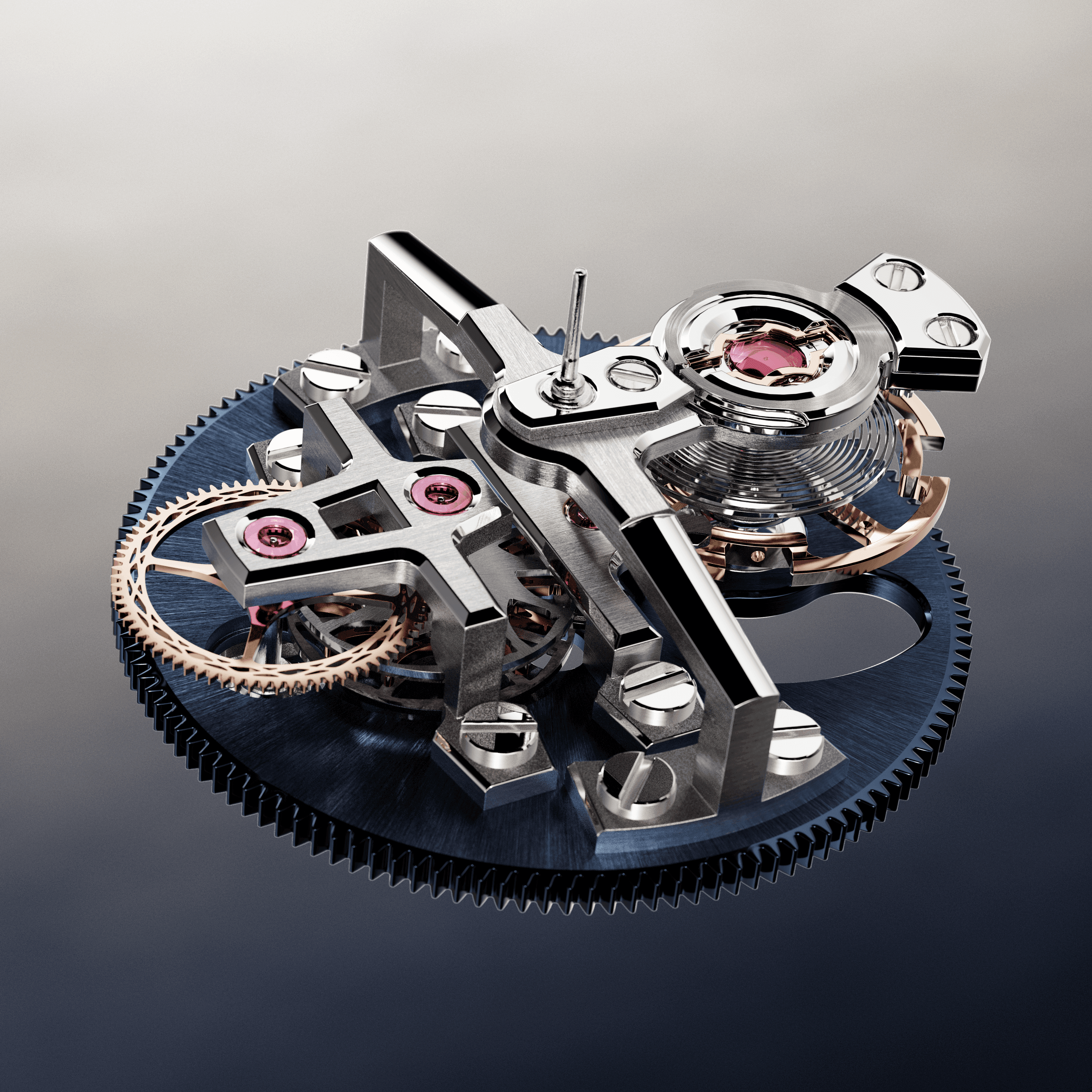
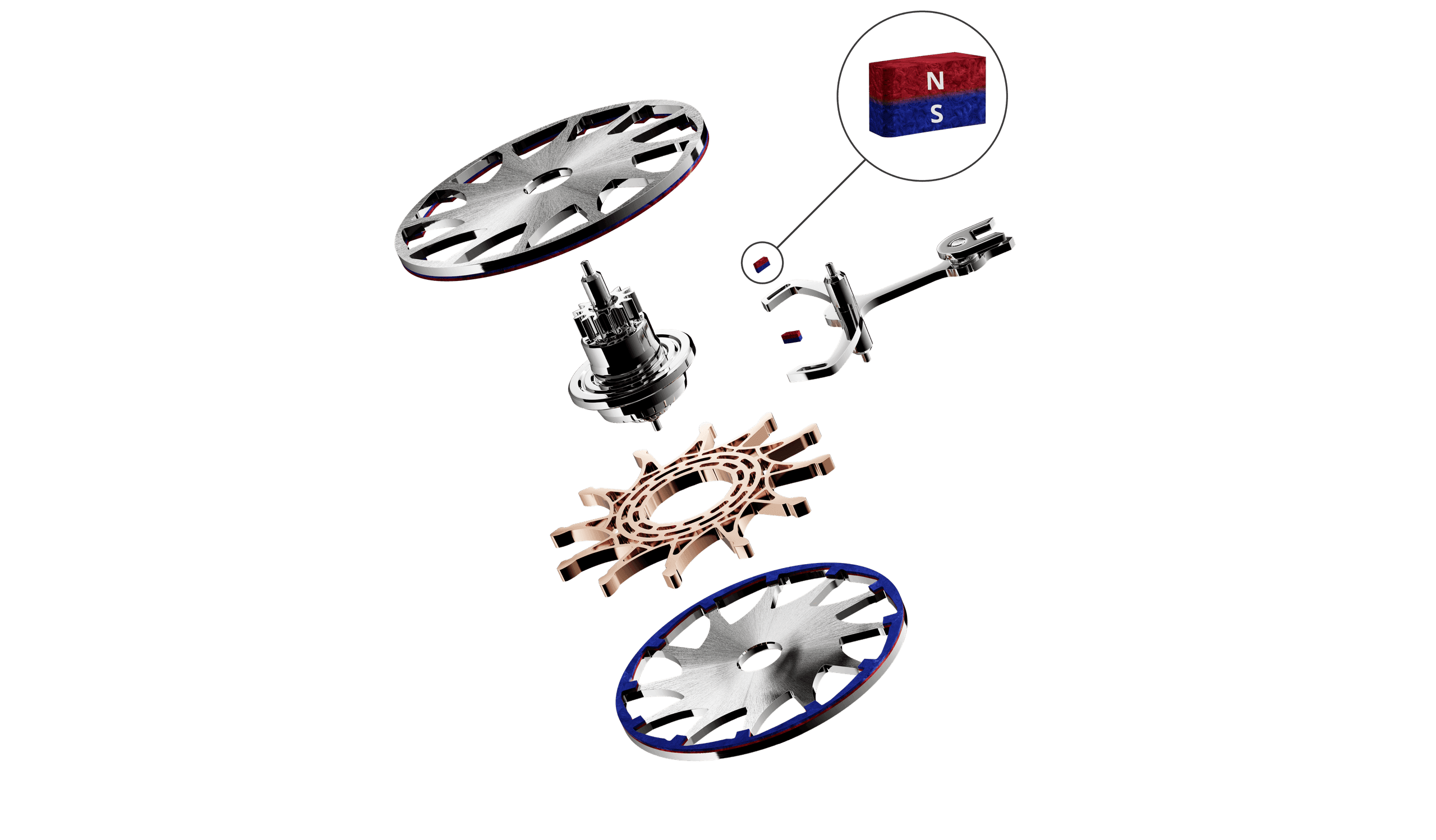
Since the early 2010s, the Manufacture has continued to perfect its mastery of the magnetic field. While this has now been extended to the escapement, its founding principle remains the same: to create a carefully controlled magnetic field and interactions.
This involves two escape-wheels each equipped with a magnetic track, at the centre of which beats a pallet-lever with likewise magnetic pallets. The idea is to take cues from constant-force escapements. Below a certain operating torque, the tourbillon stops very quickly, while above this threshold, the balance oscillates at its maximum amplitude.
This new escapement also makes it possible to decouple the impulses transmitted to the balance from the rotation of the escapewheel and hence from the rest of the gear train. Unlike in a Swiss lever movement, the inertia of the tourbillon cage has almost no influence.
By decoupling these two functions, Breguet has been able to create a tourbillon with a 10 Hz oscillator in such dimensions, also giving free rein to design choices, for example by offsetting its balance from the cage’s centre of rotation.
Avant-gardeaesthetics
The Expérimentale 1 is housed in a 43.5 mm-diameter Breguet gold case, a size inspired by the standards of the Marine collection.
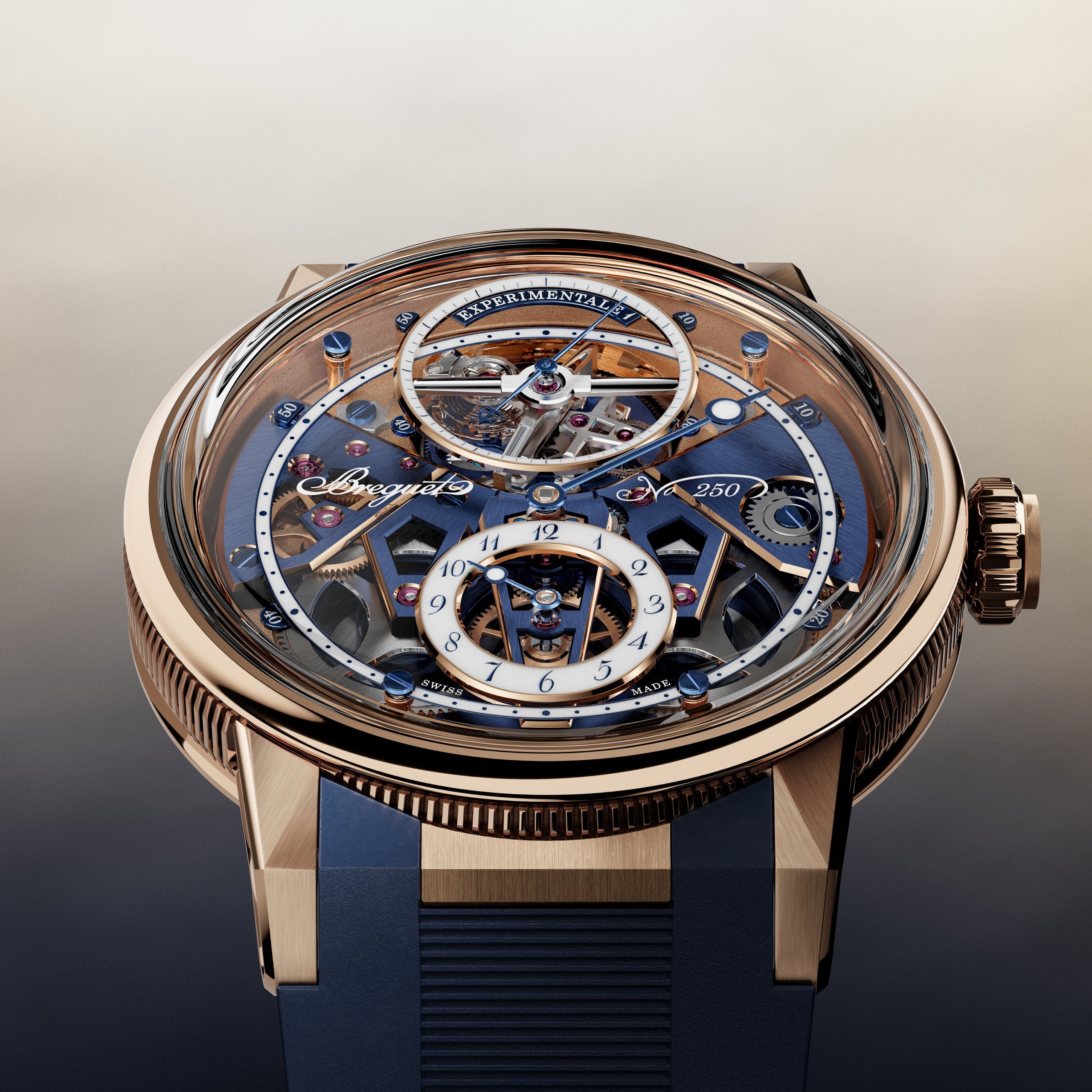
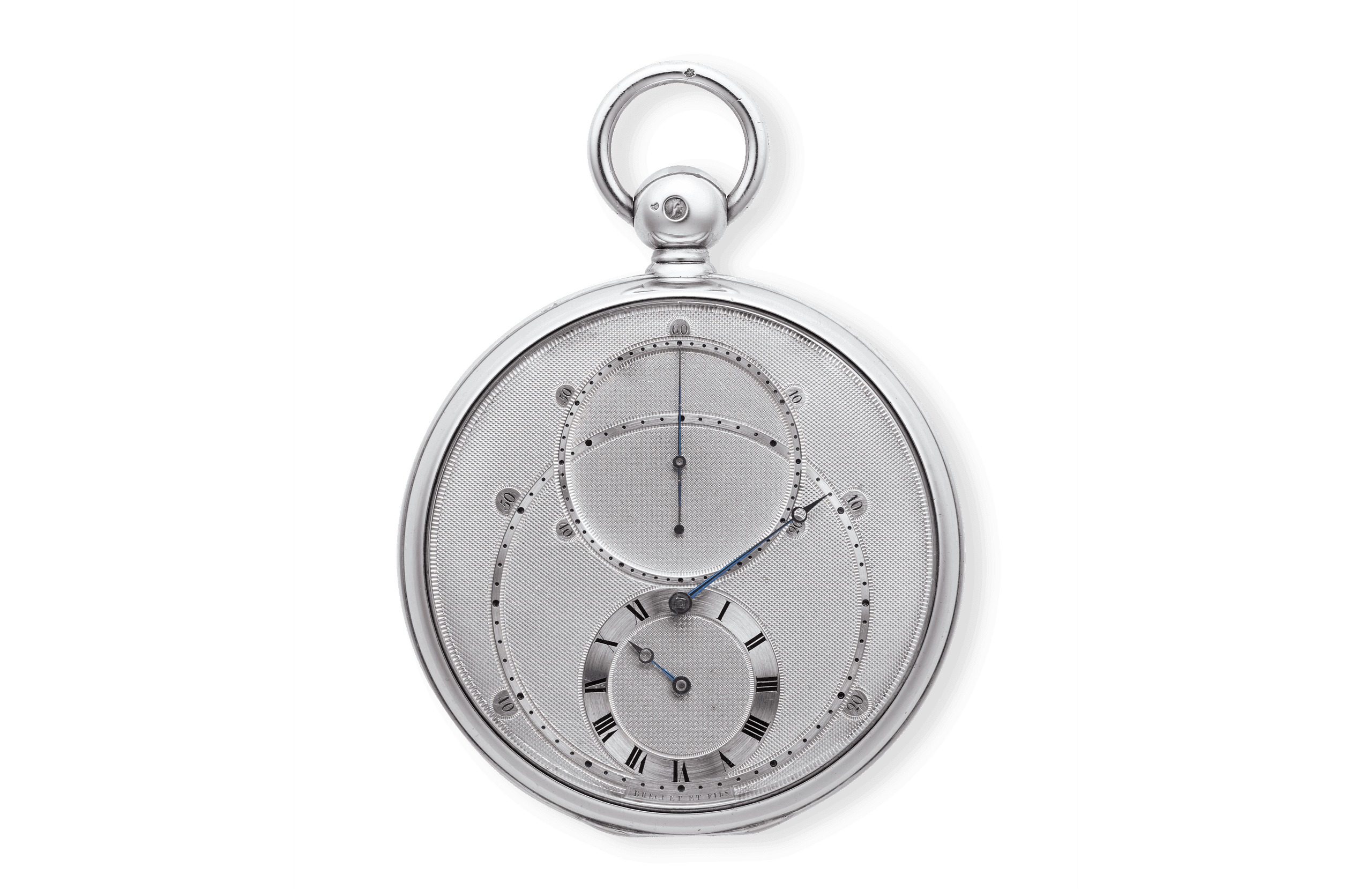
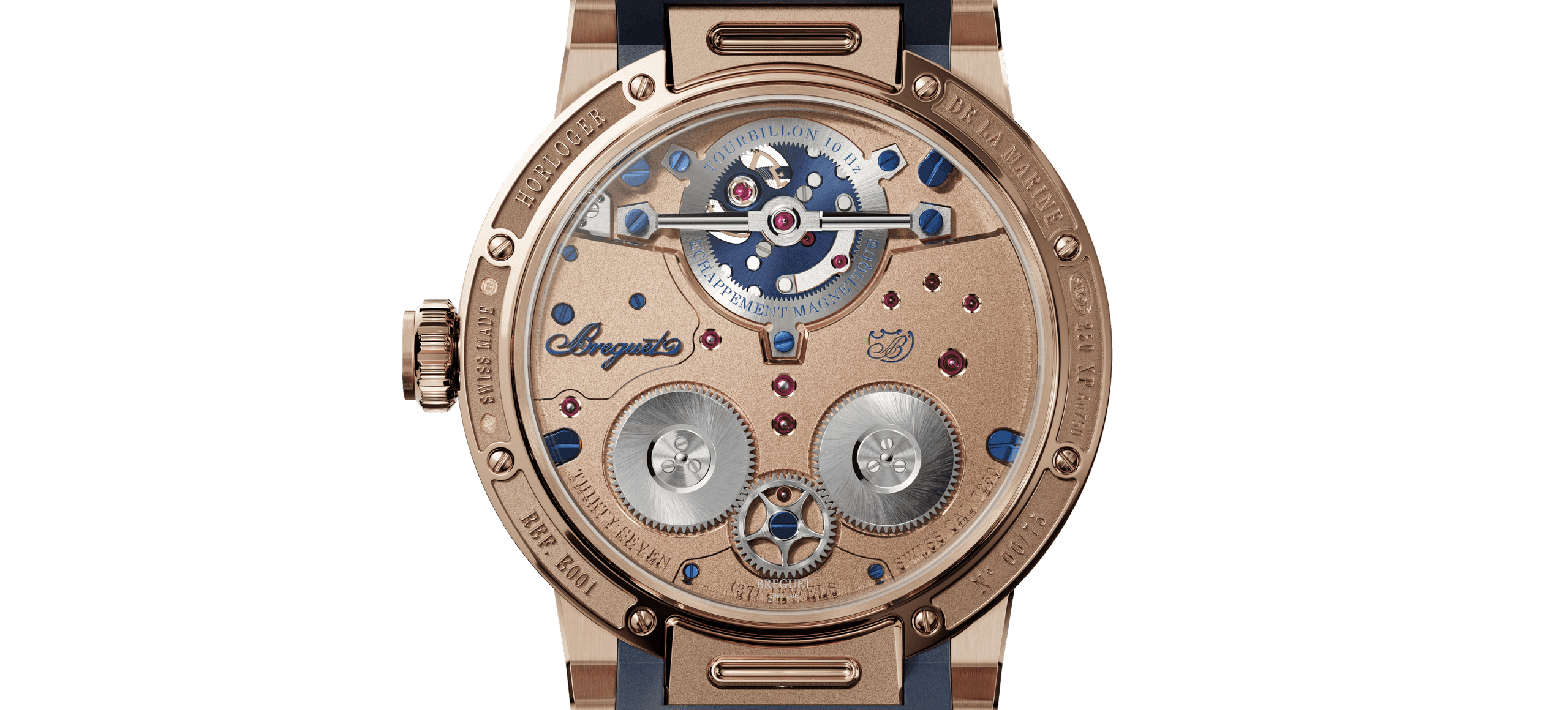
In terms of design, the timepiece is inspired by the pocket watch No. 3448, picking up the latter’s key characteristics with a regulatorstyle display and symmetrical movement while taking them to a new level by merging front and back. The Expérimentale provides full visibility, thanks to a sapphire dial providing a view of the entire movement.
A 21st centurycreation
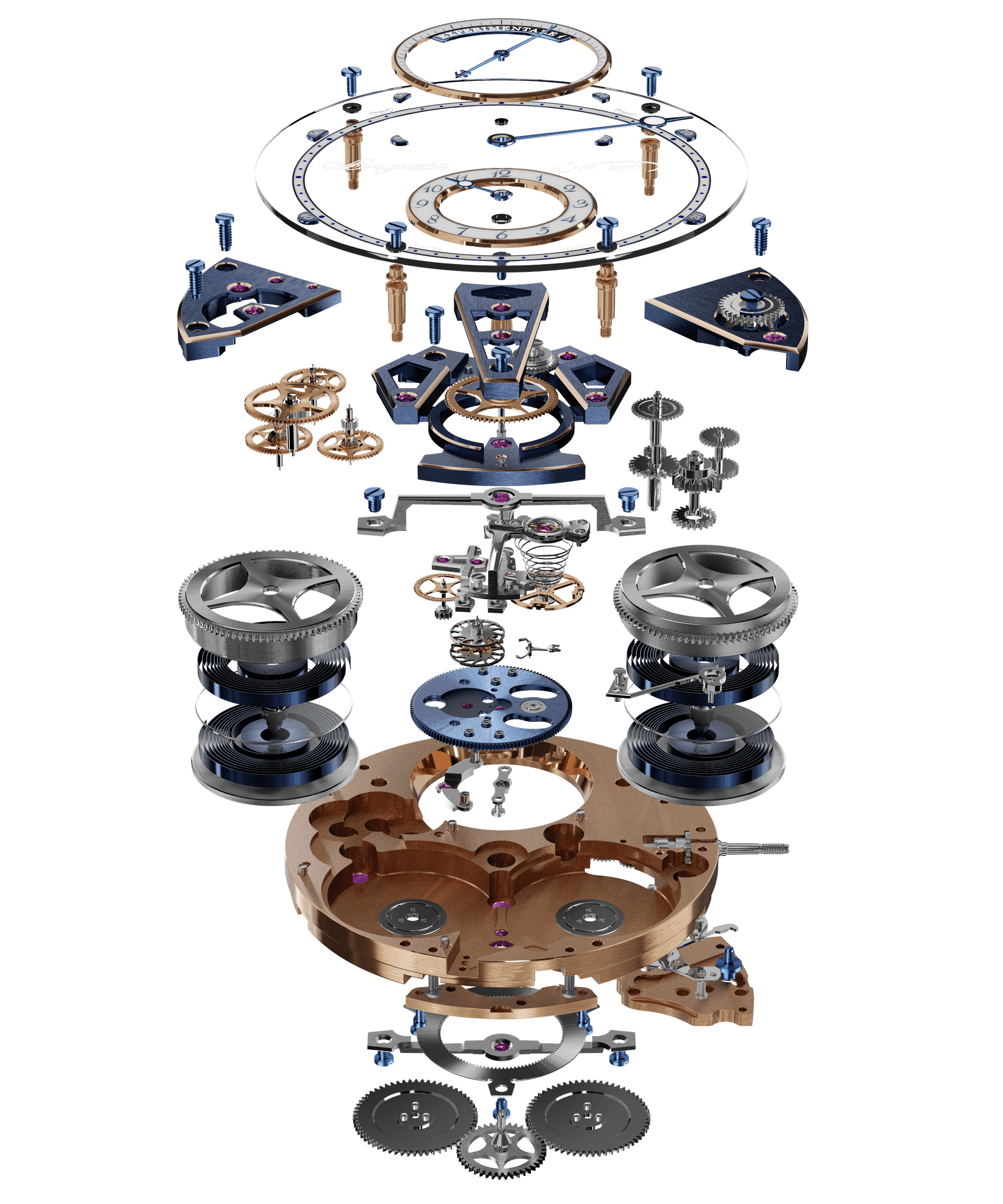
The first thing to note is the construction of the solid gold bridges, whose soft curves have given way to sharp angles. Their surface is satin-brushed, while the angles are hand-finished and mirror-polished to accentuate the rigorous geometry of their design. Breguet gold, combined with the navy blue coating, reveals itself in all its complexity with a blend of warmth, brilliance and intensity. The blue hue of the barrel springs is also a first for Breguet.
The sapphire dial rests on four gold pillars. It displays the hours, formed by three linked luminescent circles. The large peripheral minutes track surrounds the chapter ring at 6 o’clock, while the tourbillon appears to escape from its confines, sitting freely at 12 o’clock – twothirds inside the minutes track and onethird above it.
It is here, directly above the Breguet gold mainplate, that the Manufacture has chosen to place the Expérimentale 1 cartouche, symbolically crowning the entire composition – and more particularly its 10 Hz tourbillon with a constant-force magnetic escapement. The latter consists of a large rounded-off polished bridge, with the small seconds dial resting at its centre.