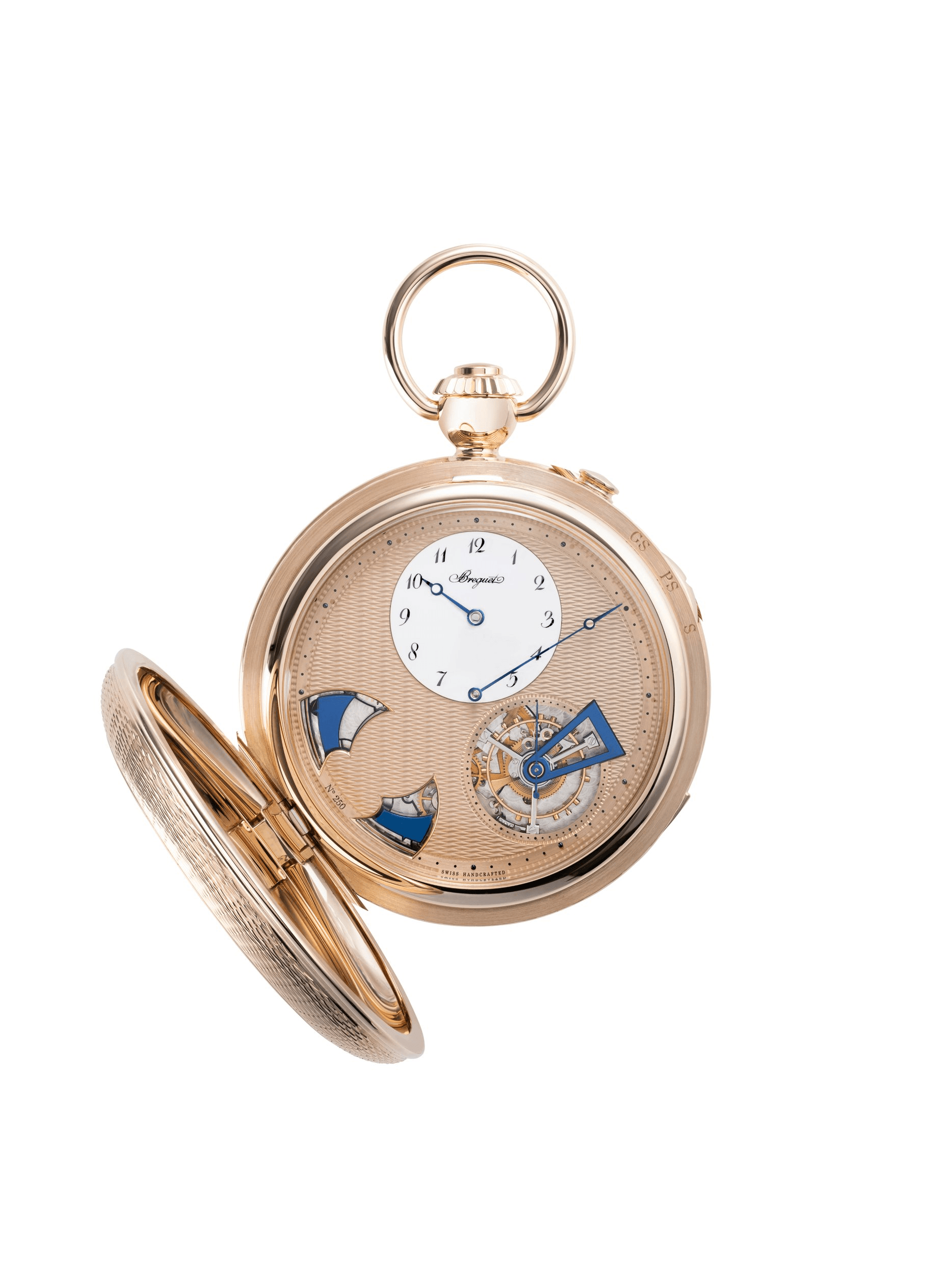
Classique Grande Sonnerie
A highly complicated pocket watch featuring Métiers d'Art craftsmanship, it is equipped with a grande and petite sonnerie as well as a minute repeater with magnetic regulator for all striking scenarios, with a regulator-style time display. All powered by a tourbillon. This special timepiece, in Breguet gold with Bleu de France accents, will only be produced on request.
A celebrationof inventivity
The name of A.-L. Breguet is closely associated with a number of inventions that have remained at the forefront of contemporary watchmaking for over two centuries: the gong spring (1783), the shock absorber (1790), the Breguet balance spring (1795) and the tourbillon (1801), among others.
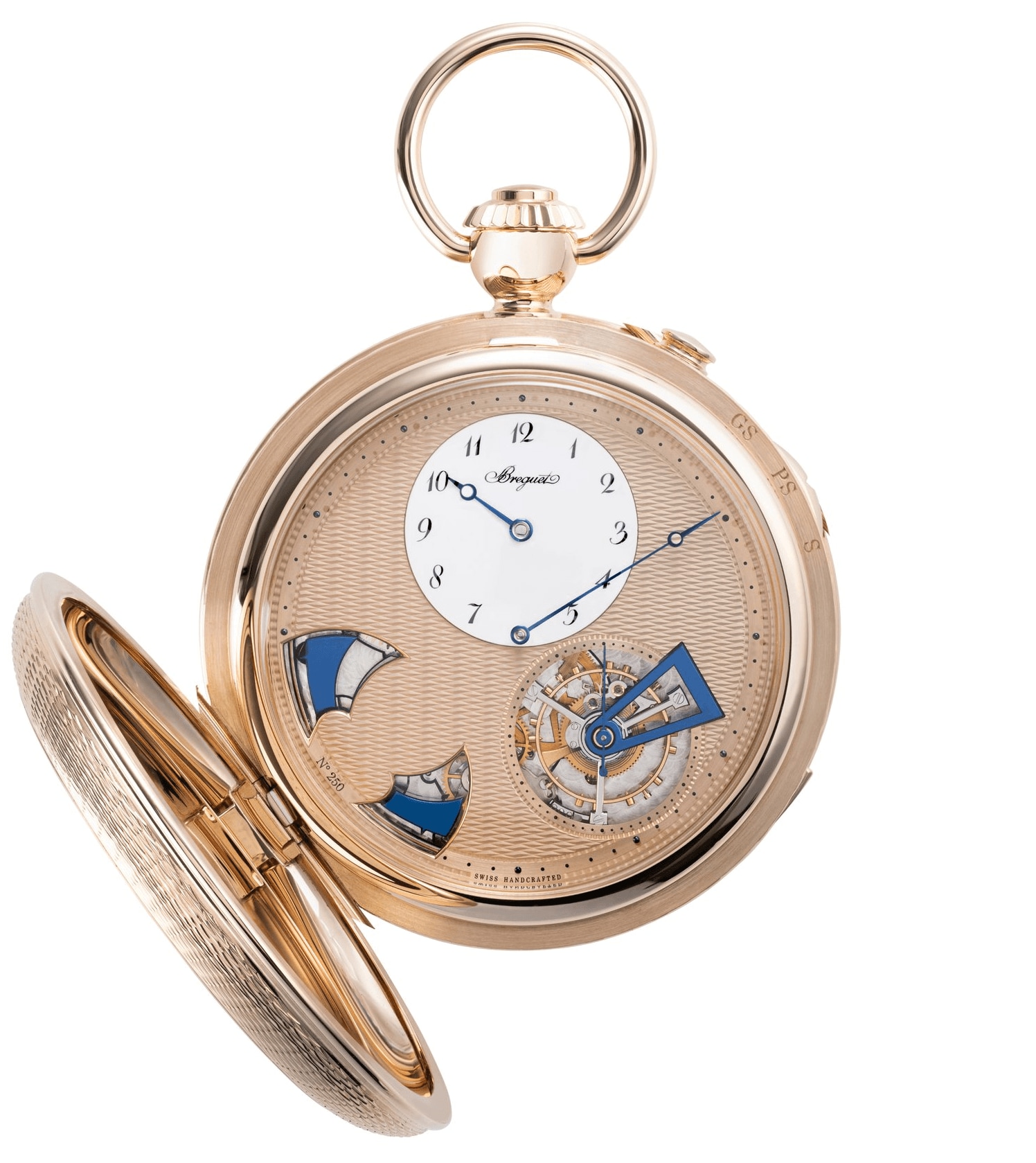
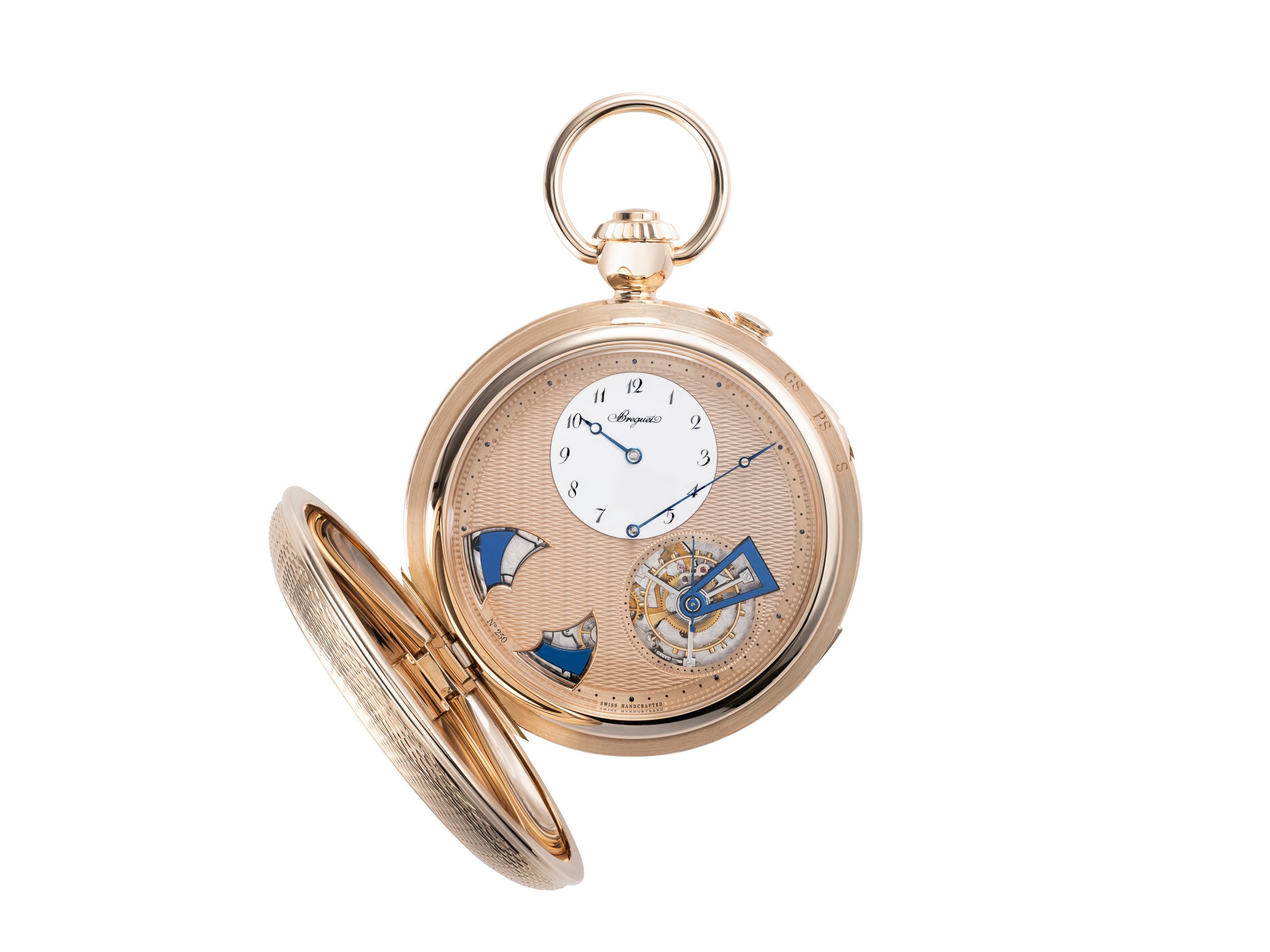
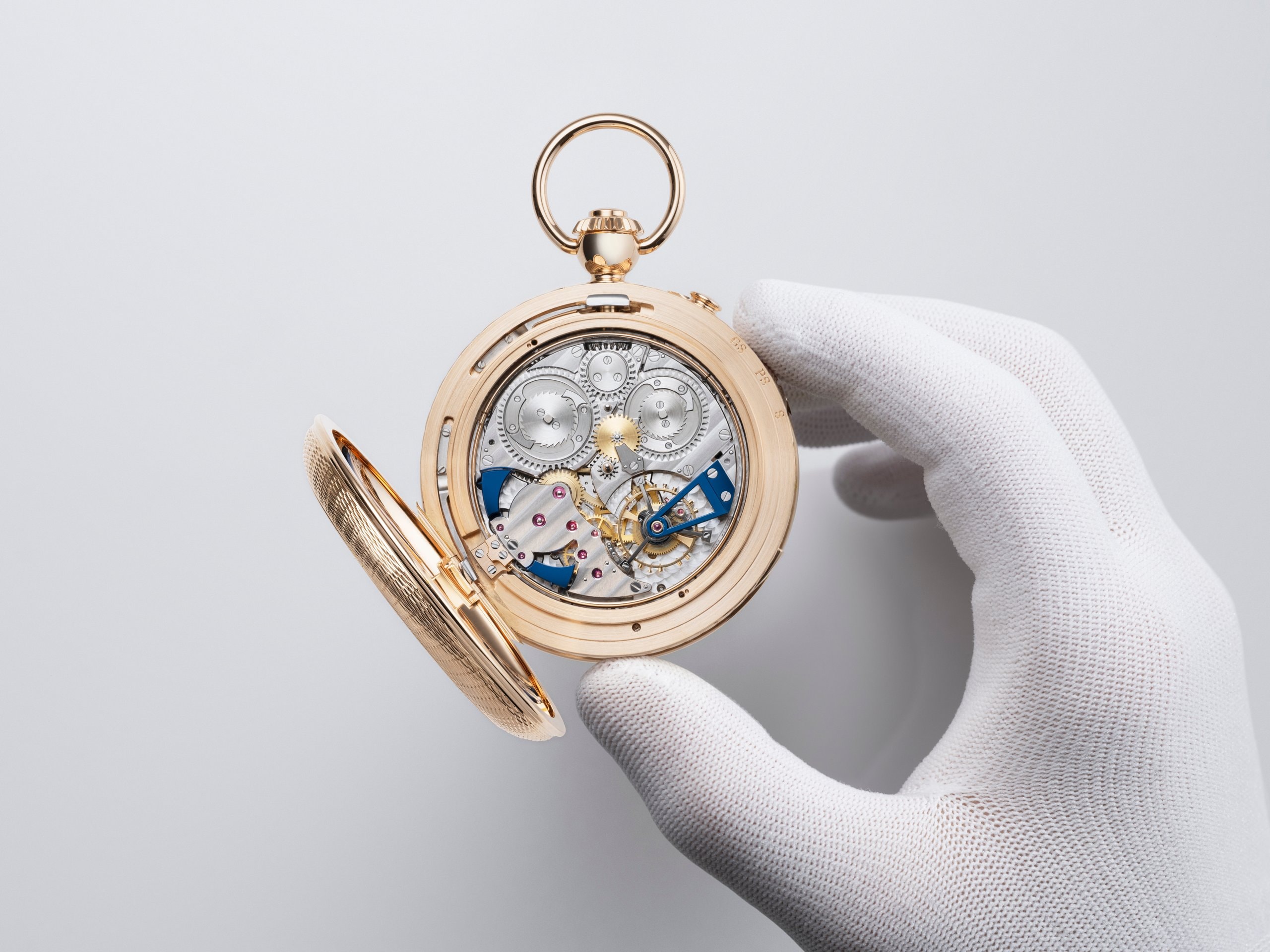
The Classique Grande Sonnerie Métiers d'Art 1905 celebrates these major inventions, incorporating them into a movement comprising 532 components – the first of its kind that Breguet has produced in over 20 years. This authentic Grande Complication features a Grande Sonnerie mechanism and an on-demand minute repeater, as well as a tourbillon and a regulator-style display to emphasise its quest for precision.
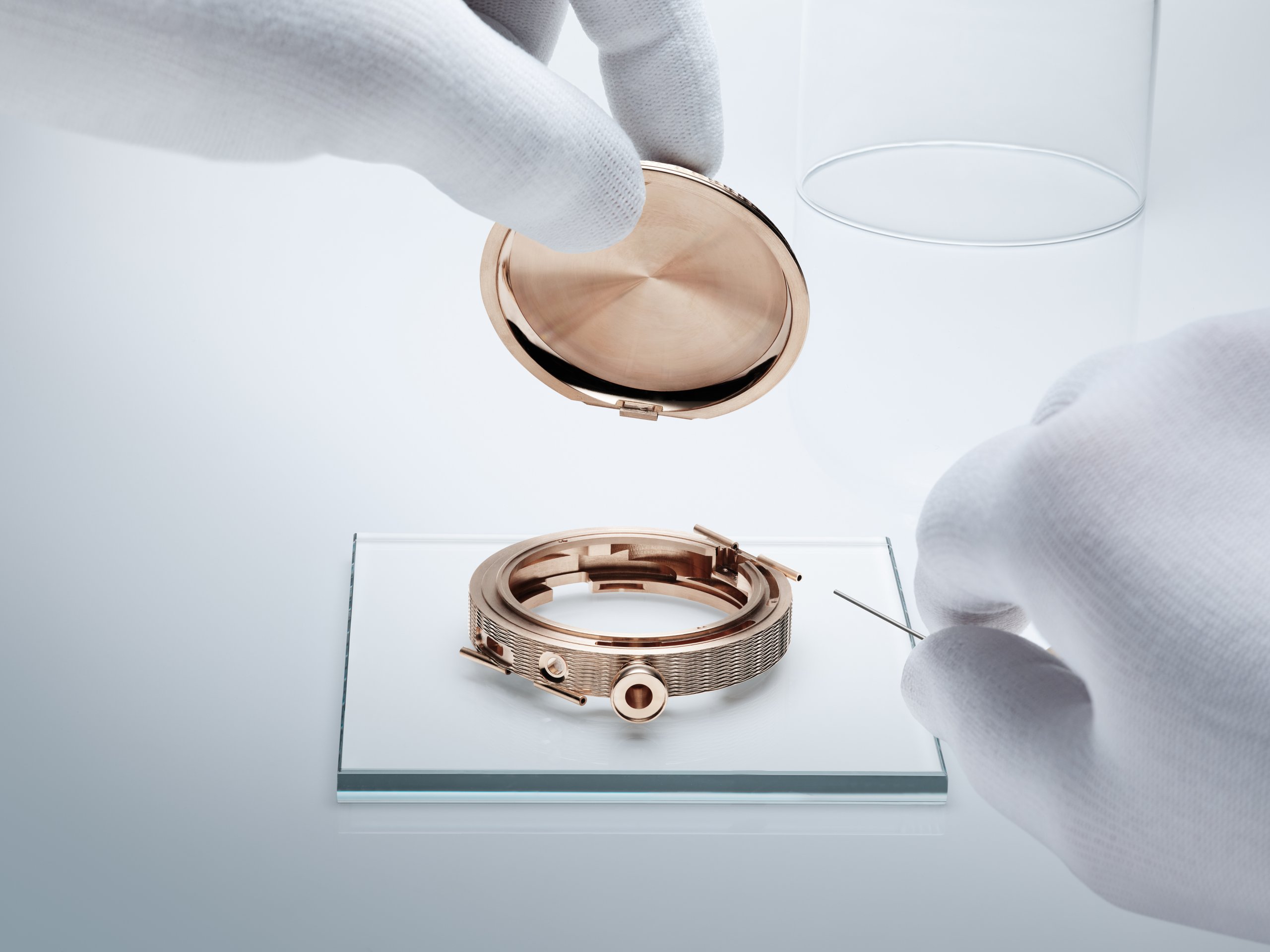
First assembled in the raw, then fully decorated and put into operation, it requires more than six months of assembly. The quintessence of the Breguet spirit, it features exceptional finishes derived from the master's heritage: guilloché, grand feu enamel, engravings and a secret signature made with a pantograph.
This piece is protected by two patents that echo two inventions by Breguet: the gong spring and the gold gong spring. Another distinctive feature is its Bleu de France colour, emblematic of Breguet's adopted country, which won over the court of Versailles. This shade, introduced at the instigation of Louis XIV, can be found on the shop fronts of Place Vendôme, including that of Breguet, where this timepiece was officially unveiled.

In 1775, A.-L. Breguet opened his workshop on the Quai de l'Horloge in Paris. The manufacture that now bears his name celebrates the heritage of the great watchmaker, who was personally associated with the most important milestones in his craft. His aesthetic codes (guilloché, engraving, fluted case, hollowed-out hands, etc.) and techniques (tourbillon, perpetual winding, chronometric seconds, shock absorber, spring-loaded gong, etc.) have left an indelible mark on the industry, a quarter-millennium that followed his work.
The Classique Grande Sonnerie Métiers d'Art 1905 encapsulates much of this extraordinary journey. It encompasses four major components. First, the quest for precision. To this end, the timepiece is equipped with a tourbillon. The process was patented by Breguet in 1801 and has never really been surpassed.
The timepiece also features a regulator-style display. It has three independent hands on three different sectors: the off-centre hour, the central minute, and the second at 4.30 o'clock via the tourbillon. This arrangement contributes to excellent readability and precision, with each indication having its own area and reference points.
The affirmationof Breguet codes

To achieve this, the Classique 1905 takes its cue from the master watchmaker, with a dial divided into sectors. Each sector has its own finish to accentuate its legibility and individuality. At 12 o'clock, the hours are off-centre. The Breguet hand sweeps over a grand feu enamel dial. The Arabic numerals are in petit feu black enamel. The master's signature is twofold: visible at the top, secret at the bottom, engraved flush with the enamel by a pantograph.
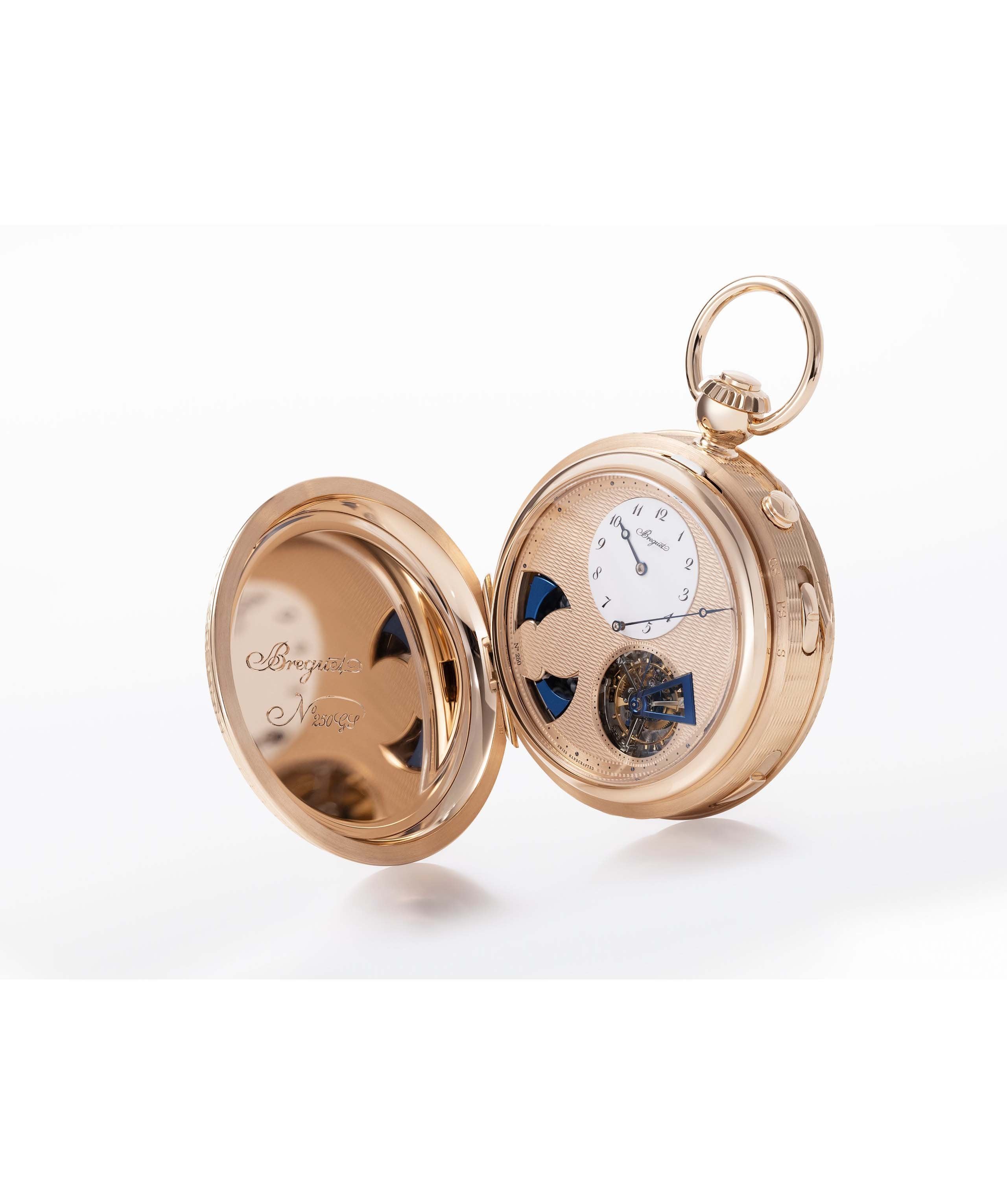
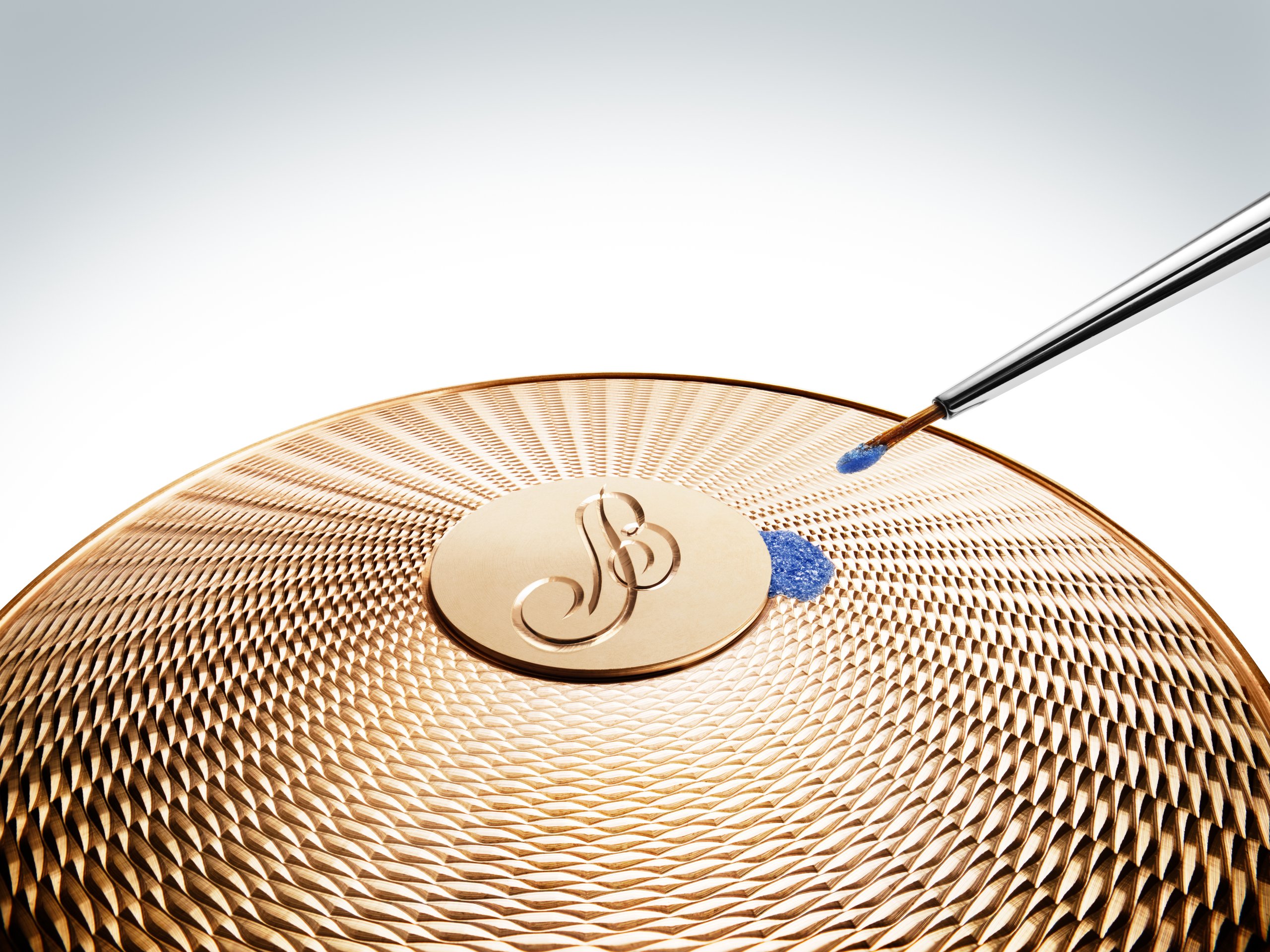
The central minutes touch a finely guilloché pattern. The widespread use of this art in watchmaking is also associated with Breguet. The motif engraved here using a traditional guilloche machine is a horizontal Quai de l'Horloge, which can also be found on the side of the case. It is inspired by the shapes of two Parisian islands surrounded by the Seine, Île Saint-Louis and Île de la Cité, where Breguet's first workshop was located. The Quai de l'Horloge still exists today in the 1st arrondissement of Paris. Discerning enthusiasts will note the exceptional length of this blued central hand, which hovers over a dedicated minute track.
the Classique 1905 celebrates the artistic crafts so dear to the Breguet manufacture. The work is crafted in Breguet gold and engraved by hand. The Seine and its course are represented by a Bleu de France enamel engraving. This colour is attested on enamel tact watches from the early 19th century; this colour, still present today, belongs to the history of France and especially to the history of Paris. The inside of the lid bears the individual number of the piece, engraved by hand.


Classique
Grande
Sonnerie